fall inside a hole
Tomy Train repairs
Originally written April 3, 2026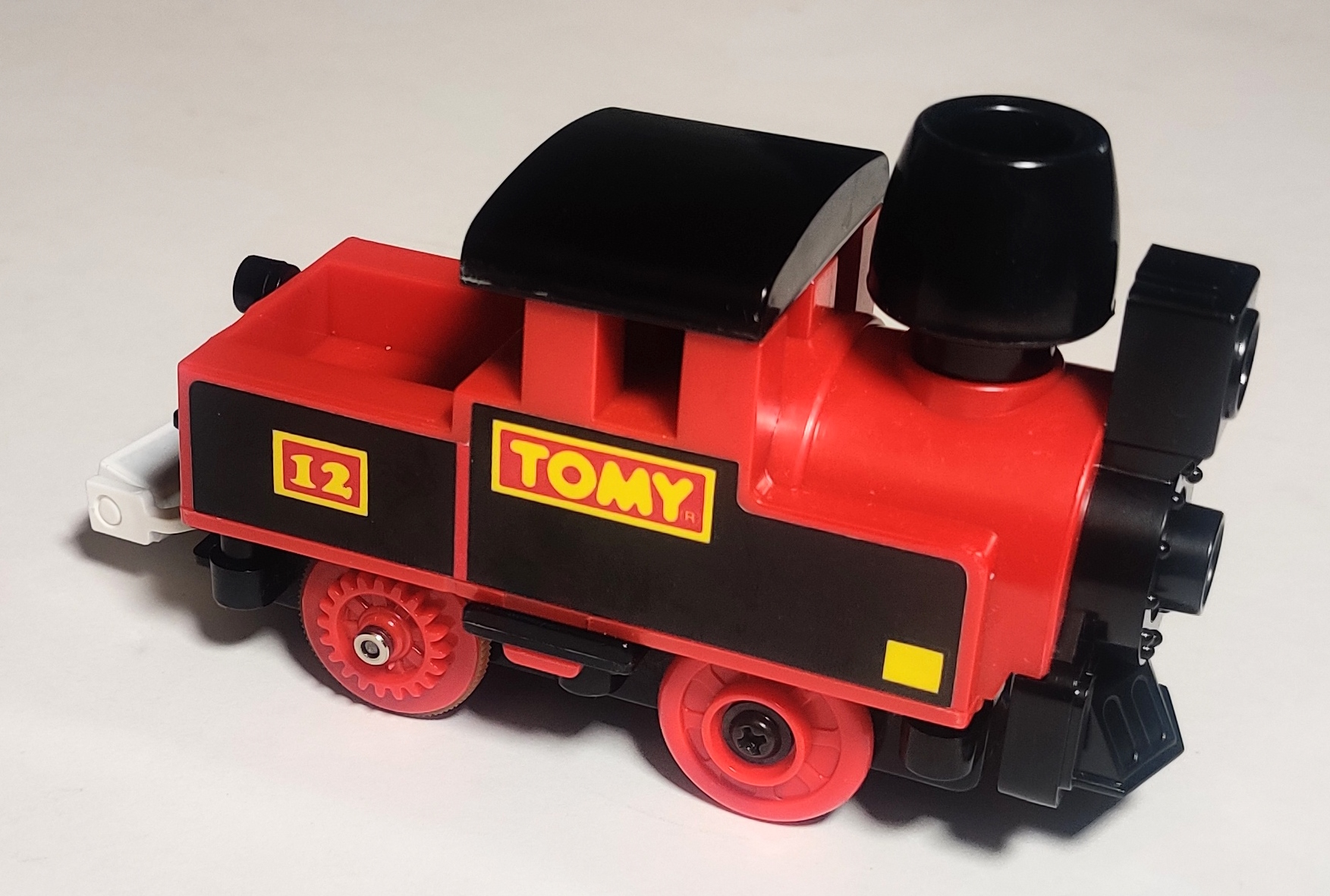
Tomy Train was an American and European series of chunky reversing trains with magnetic couplings that used Plarail-style track.
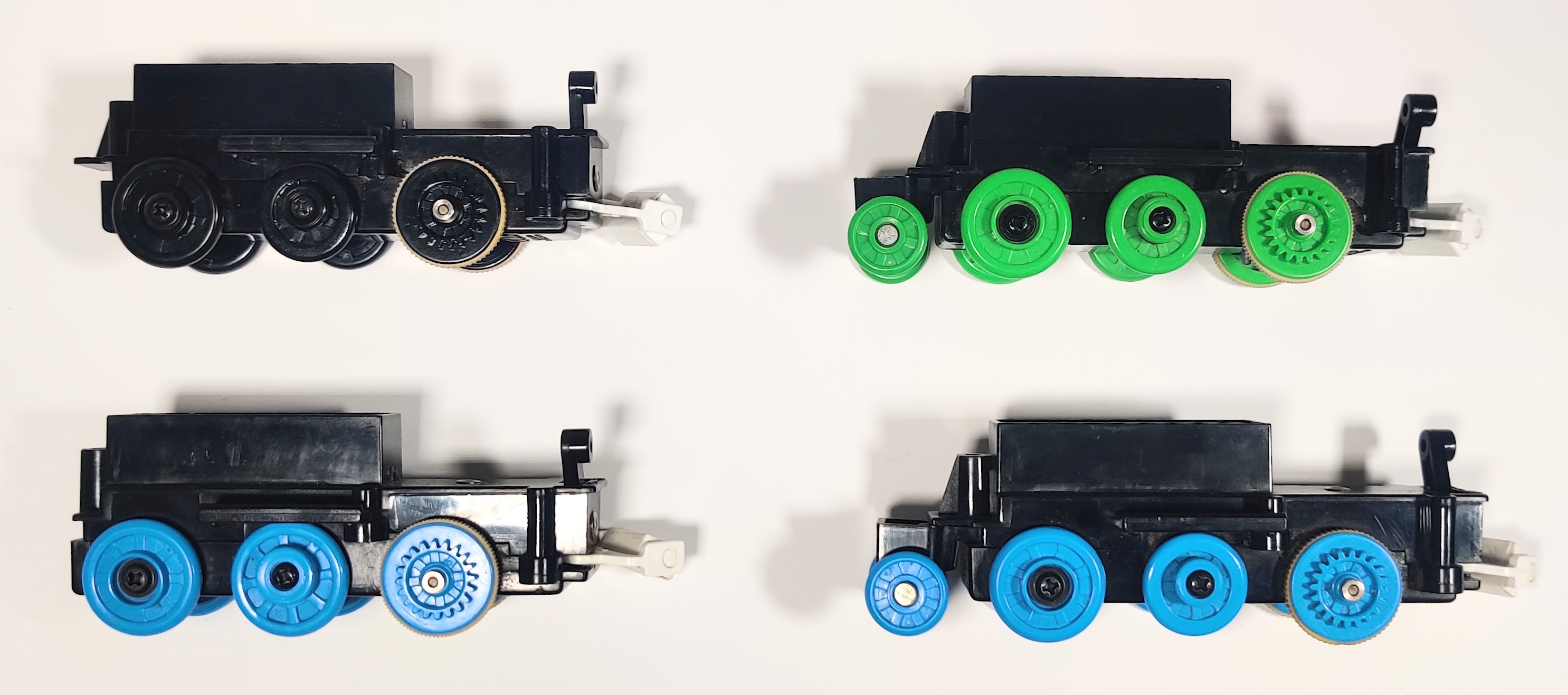
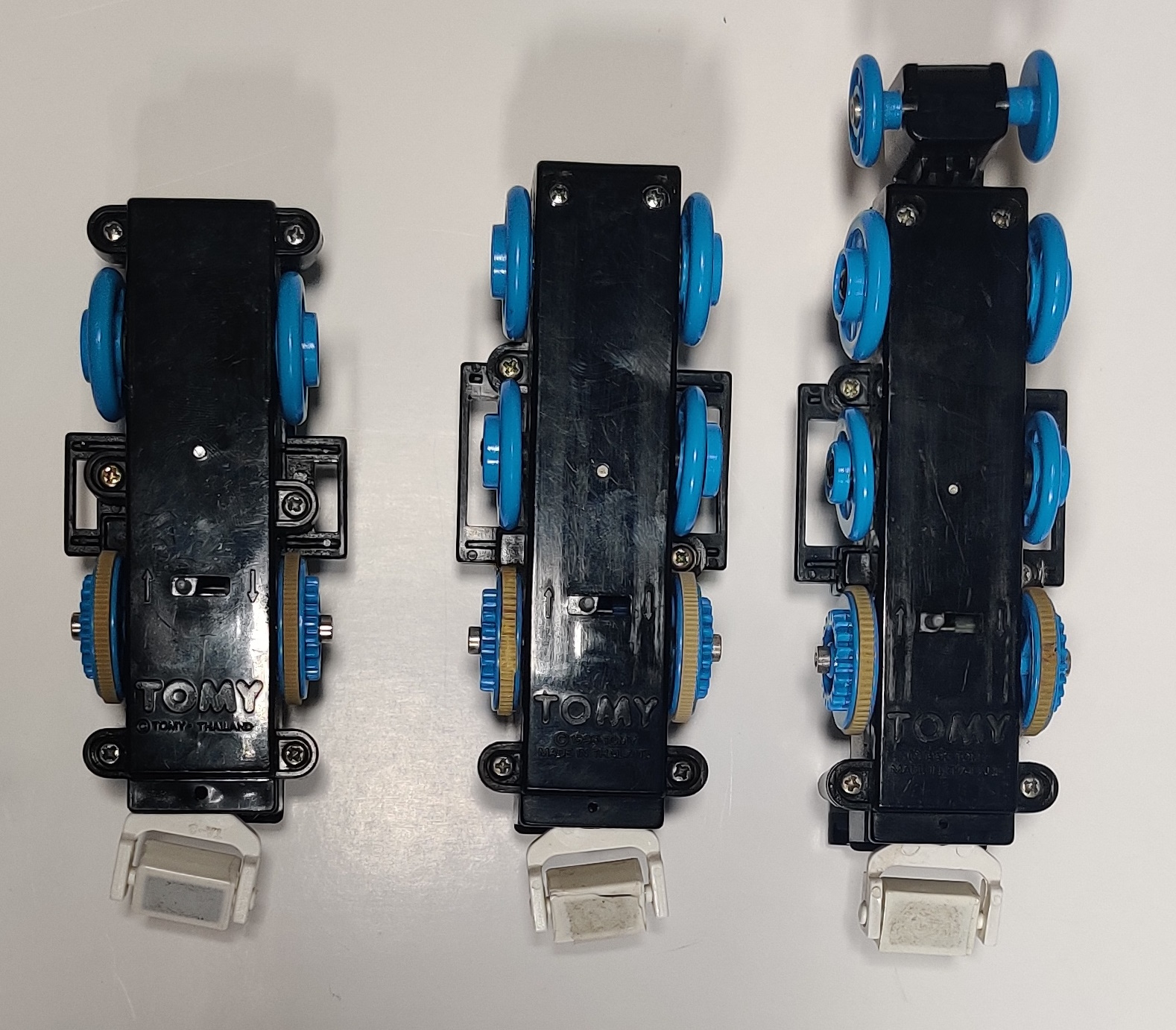
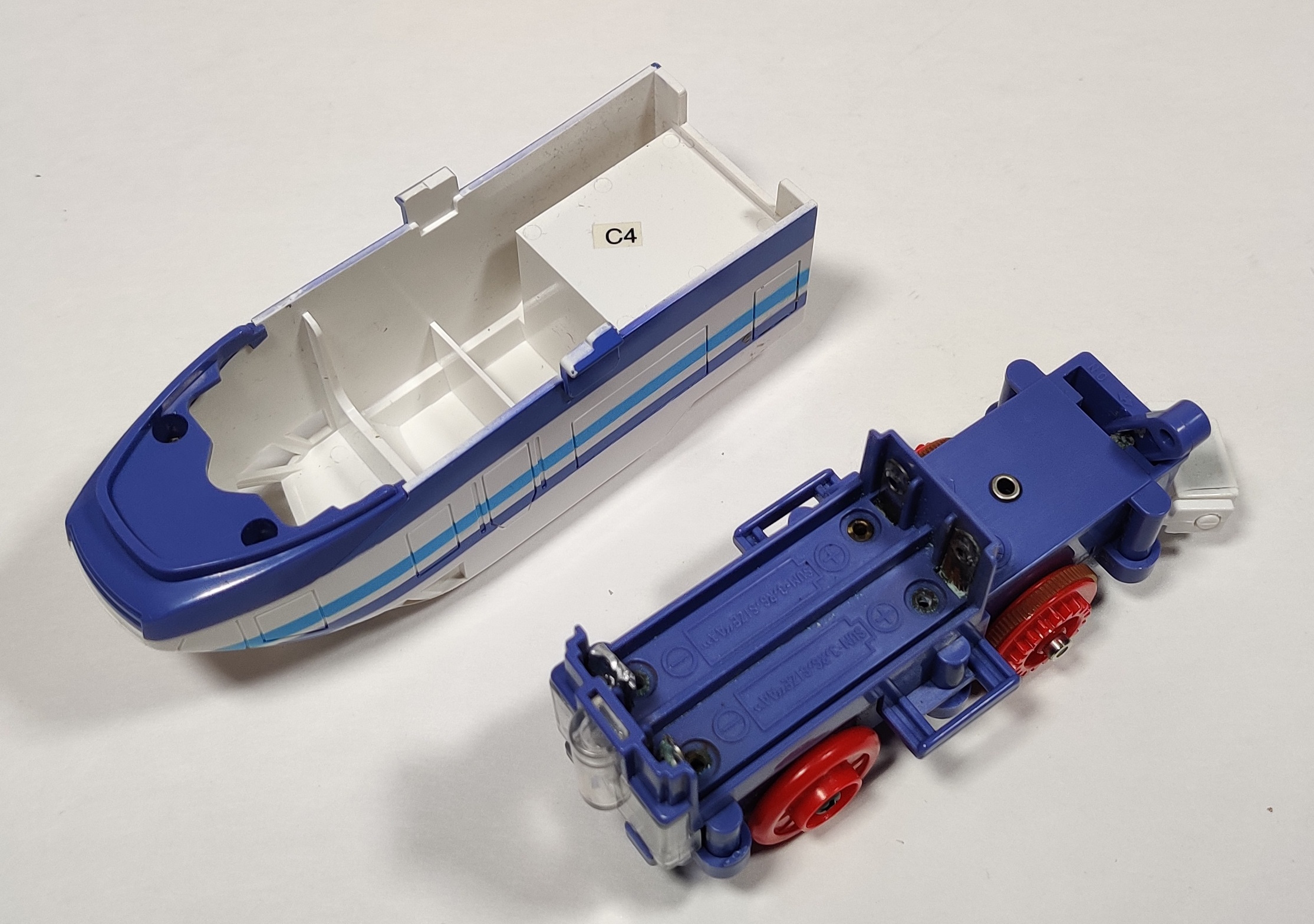
The standard trains almost all used the same chassis and even the odd chassis like the lit Hi-Speed Express or some of the Thomas series trains use the same reversing gearbox arrangement in a slightly different chassis.
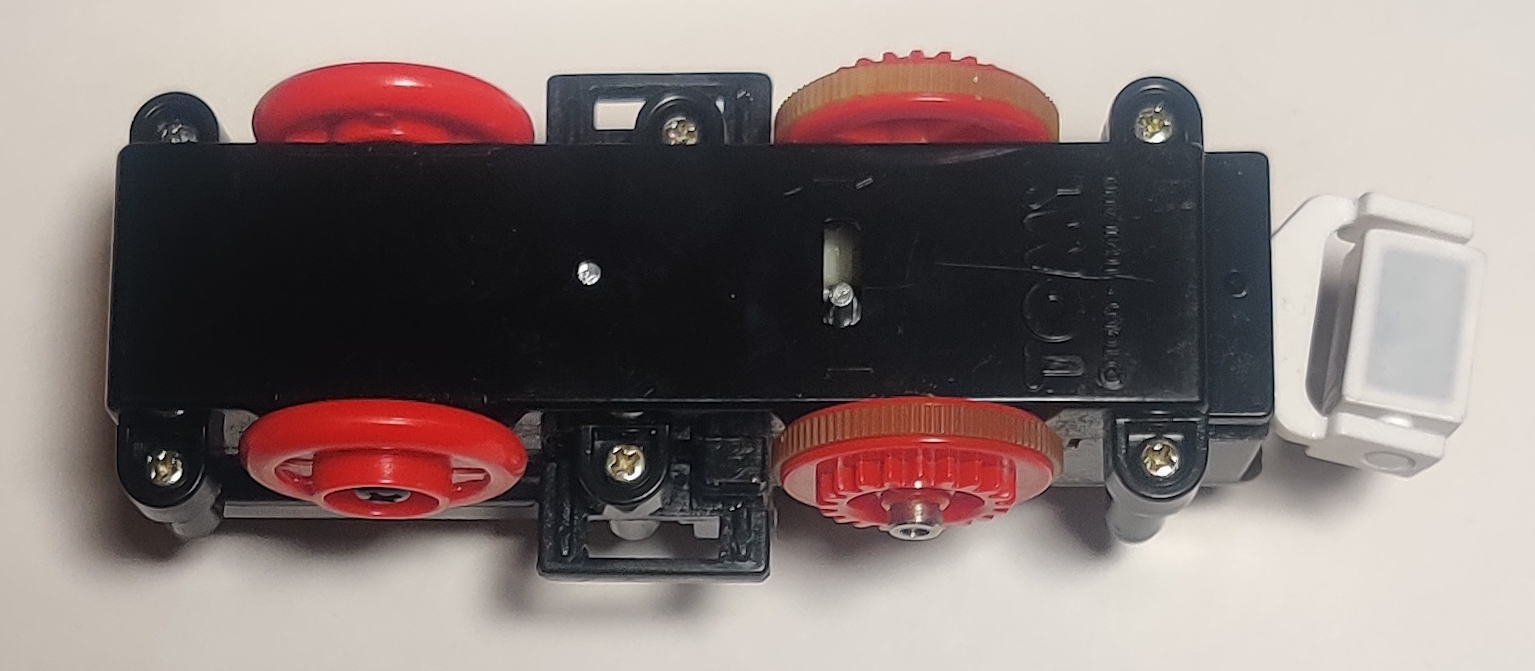
Rubber traction tires have pretty much all hardened - Tomy still makes and sells the same size of tire as a Plarail spare parts item, and packs of several pairs can be bought online. Dry-rotted tires have far less traction and will sometimes spin freely around the wheel or crumble away, and they are essential to proper operation.
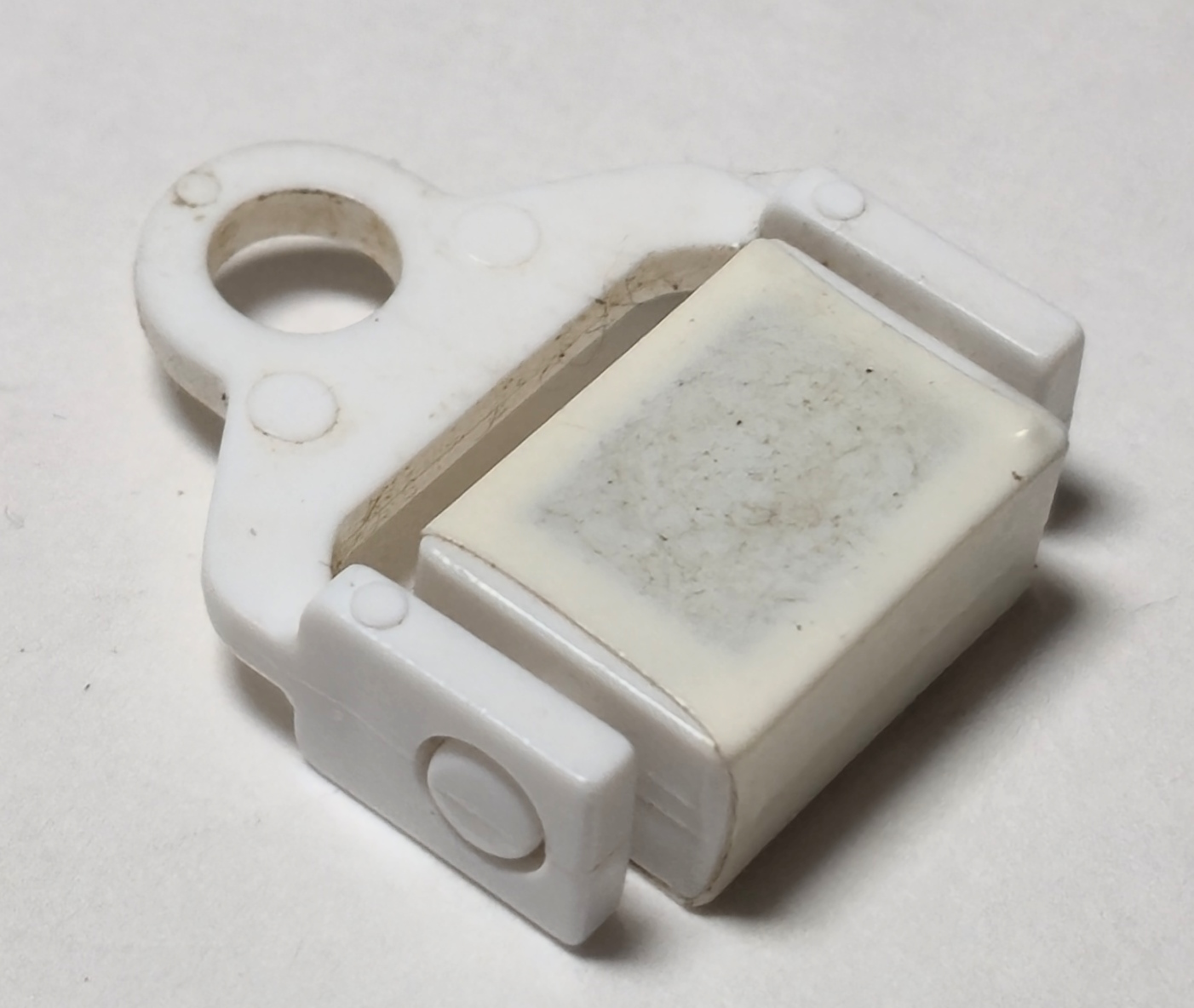
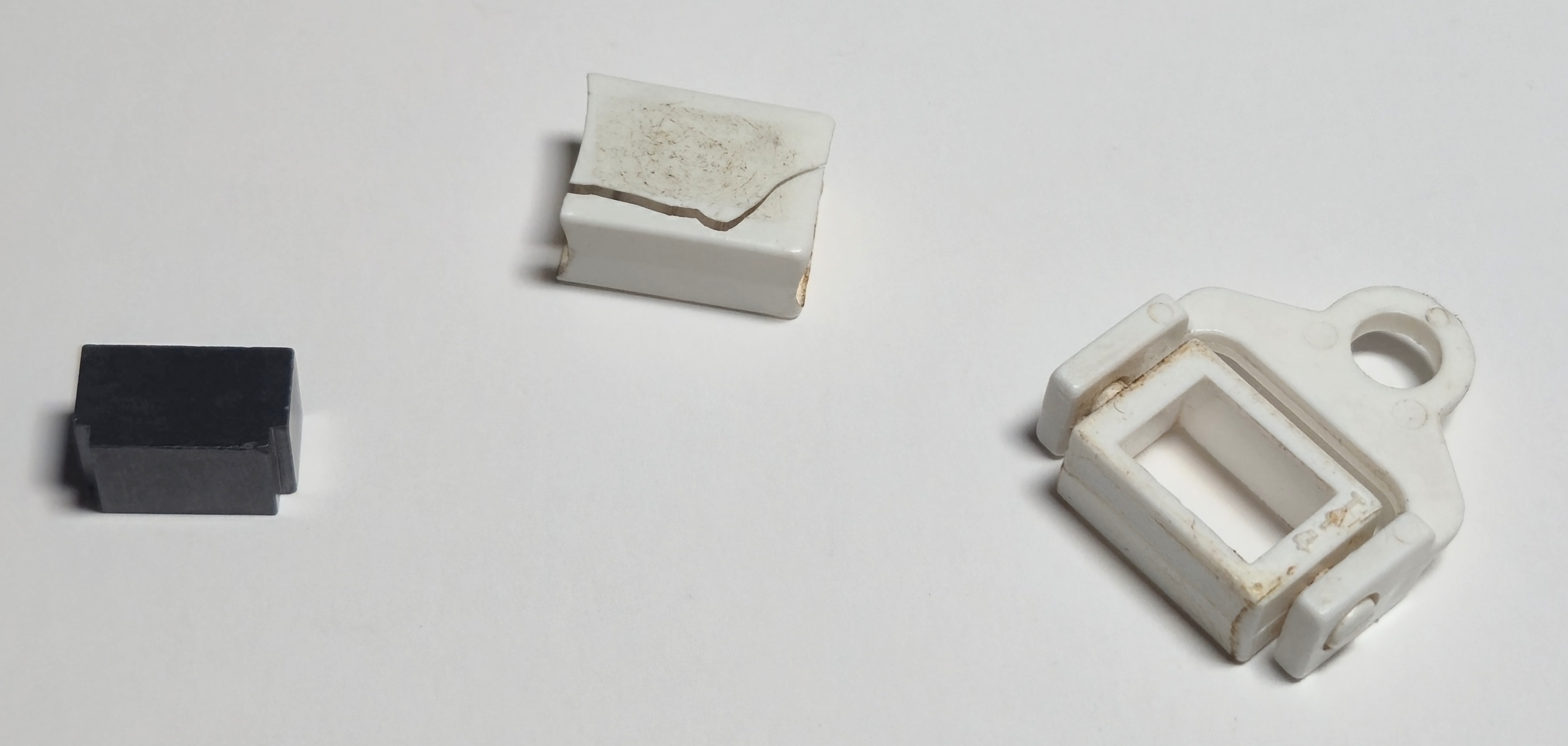
The magnetic couplings have a keyed magnet that fits into the plastic housing from one side. A white plastic wrap is applied over the magnet. Over time, these plastic covers can split and the magnets can fall out. The easiest way to reattach the magnet is to glue it back into the holder and cover it with a strip of tape around the magnet - wrapped back in the original cover, ideally, with the split on the opposite side from the wider opening where the magnet goes in.
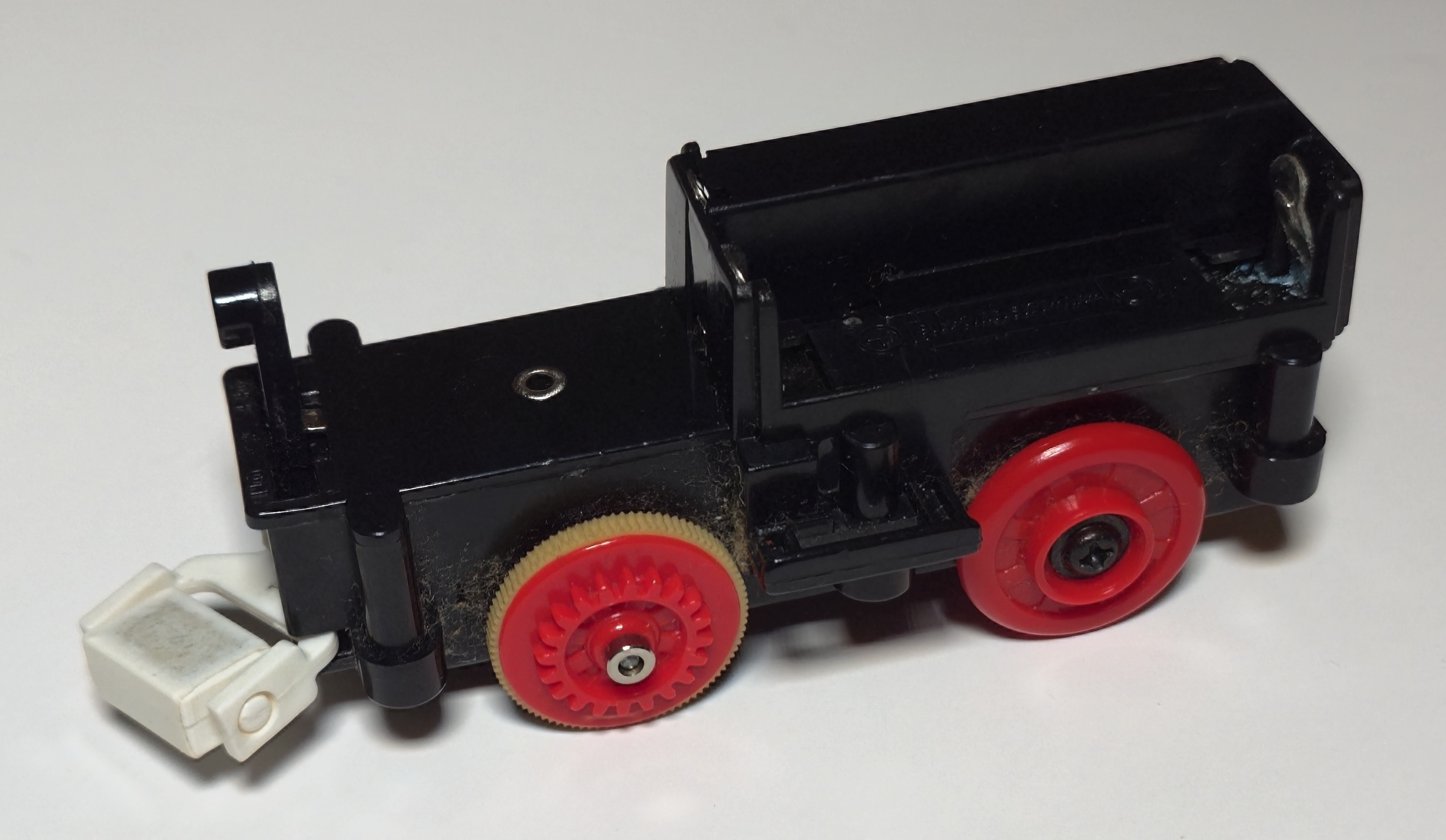
Motors can be seized up with time, and the contact strips can also become tarnished at their points of contact or corroded from leaky batteries, so disassembling the chassis can sometimes be required to get a train going again.
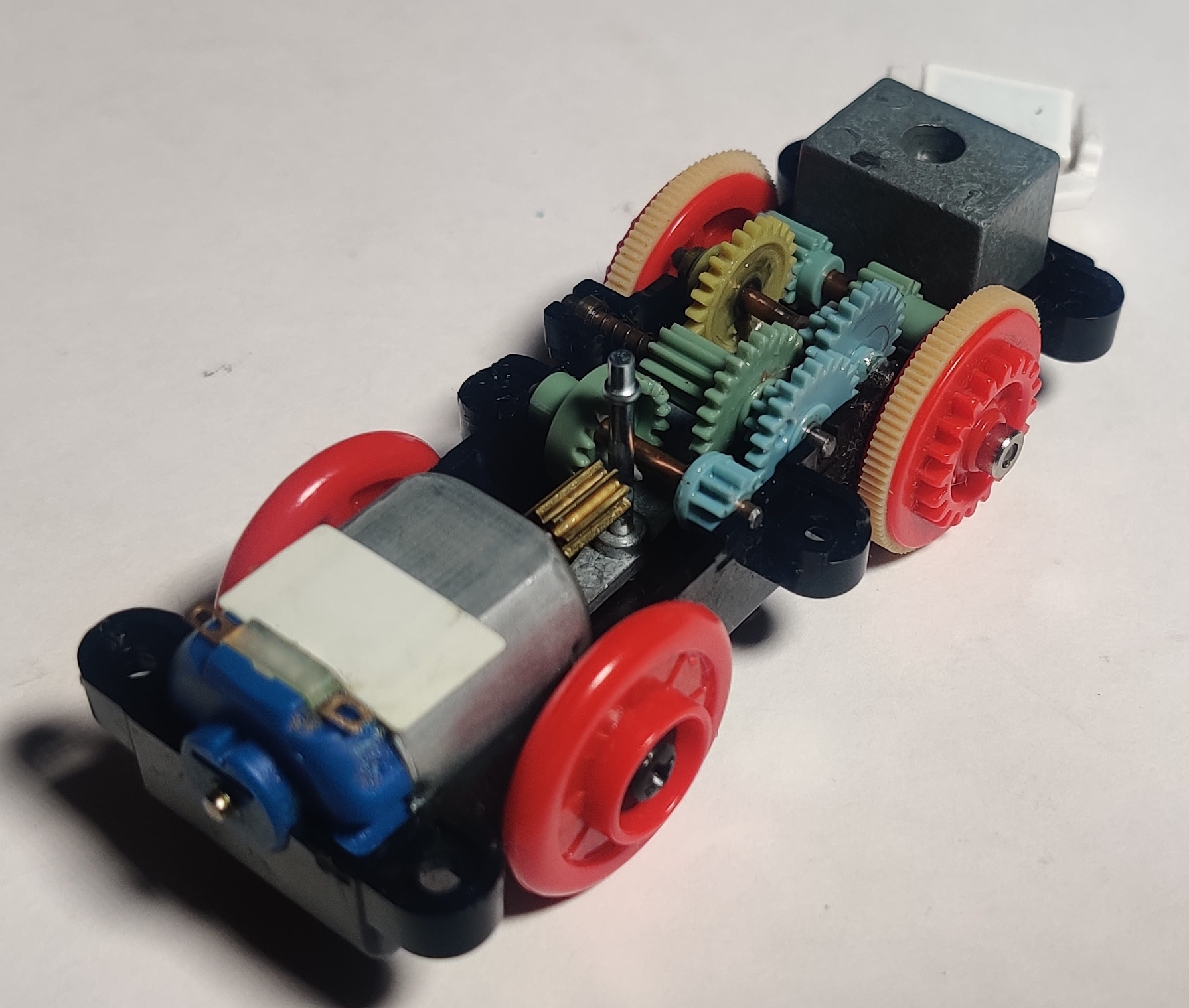
Six screws hold the chassis together from the bottom. The gearbox has a mechanical reversing mechanism triggered by special diagonal protrusions in the reversing tracks like the mechanism previously used on Round-Trip Plarail.
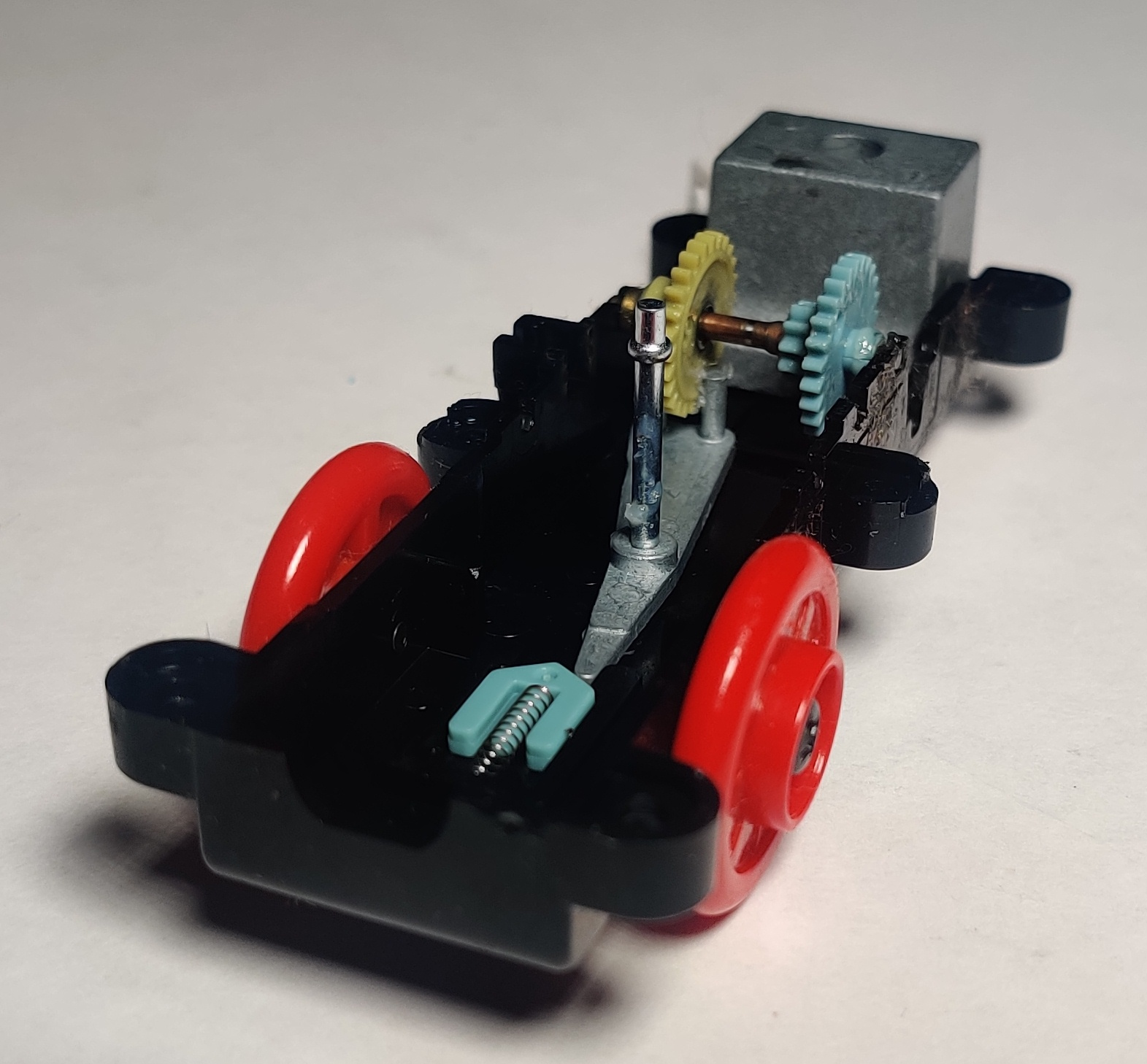
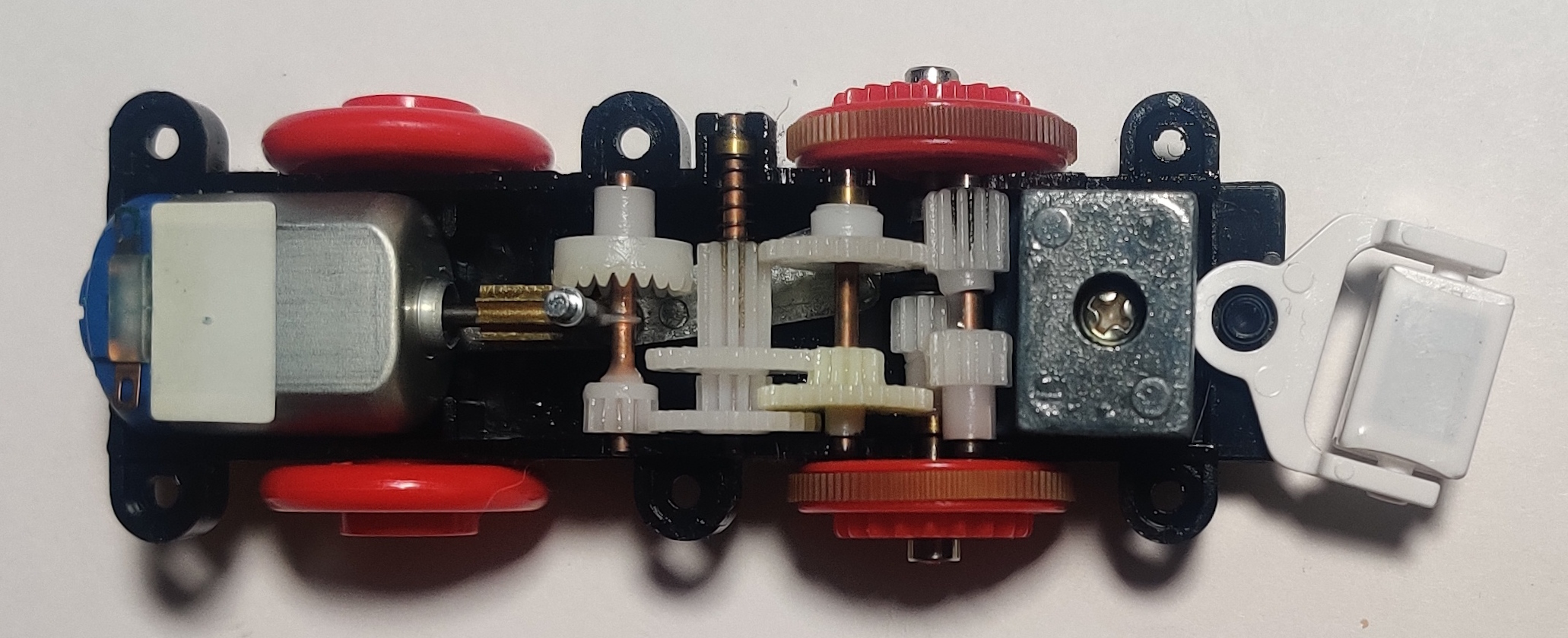
A metal sliding switch is spring-loaded to flip over and locate securely in forwards to reverse gears. The switch slides one of the gears between powering the output rear axle directly or though a reversing idler. White or blue gears were used at different points, and it seems like the motor pinion is usually brass, which is nice. A spring-loaded clutch is included as well... a nice compact multi-stage reversing gearbox.
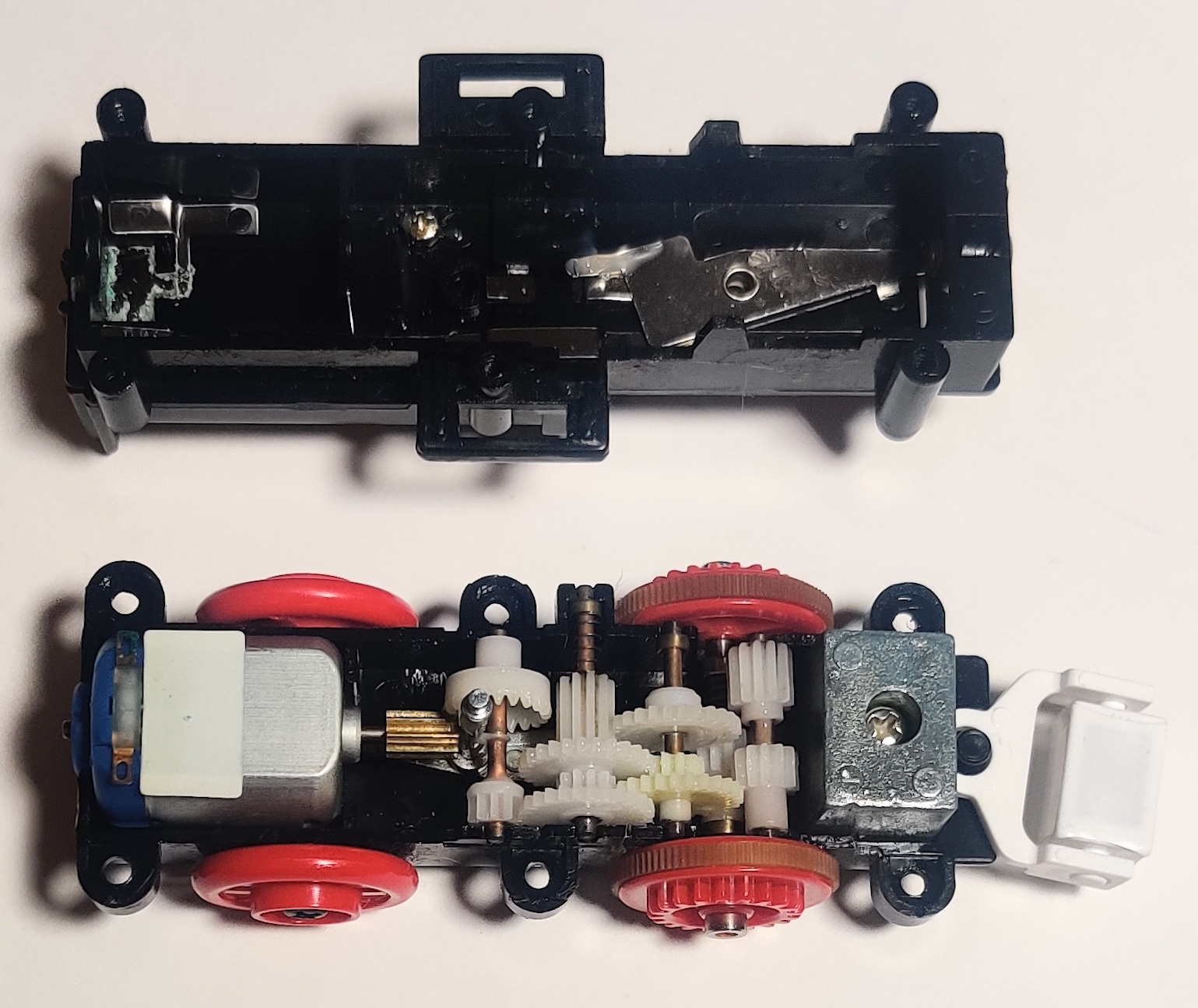
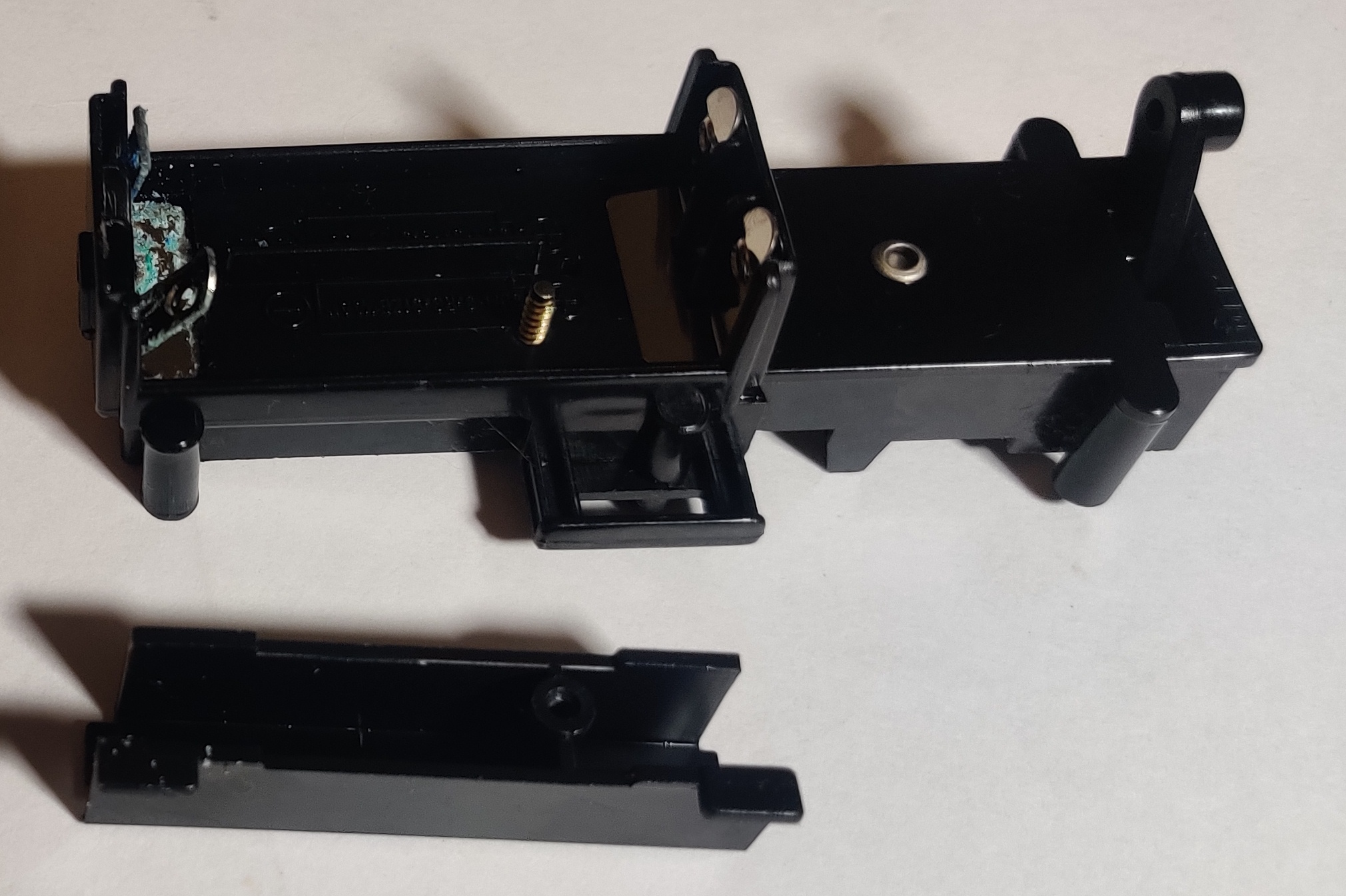
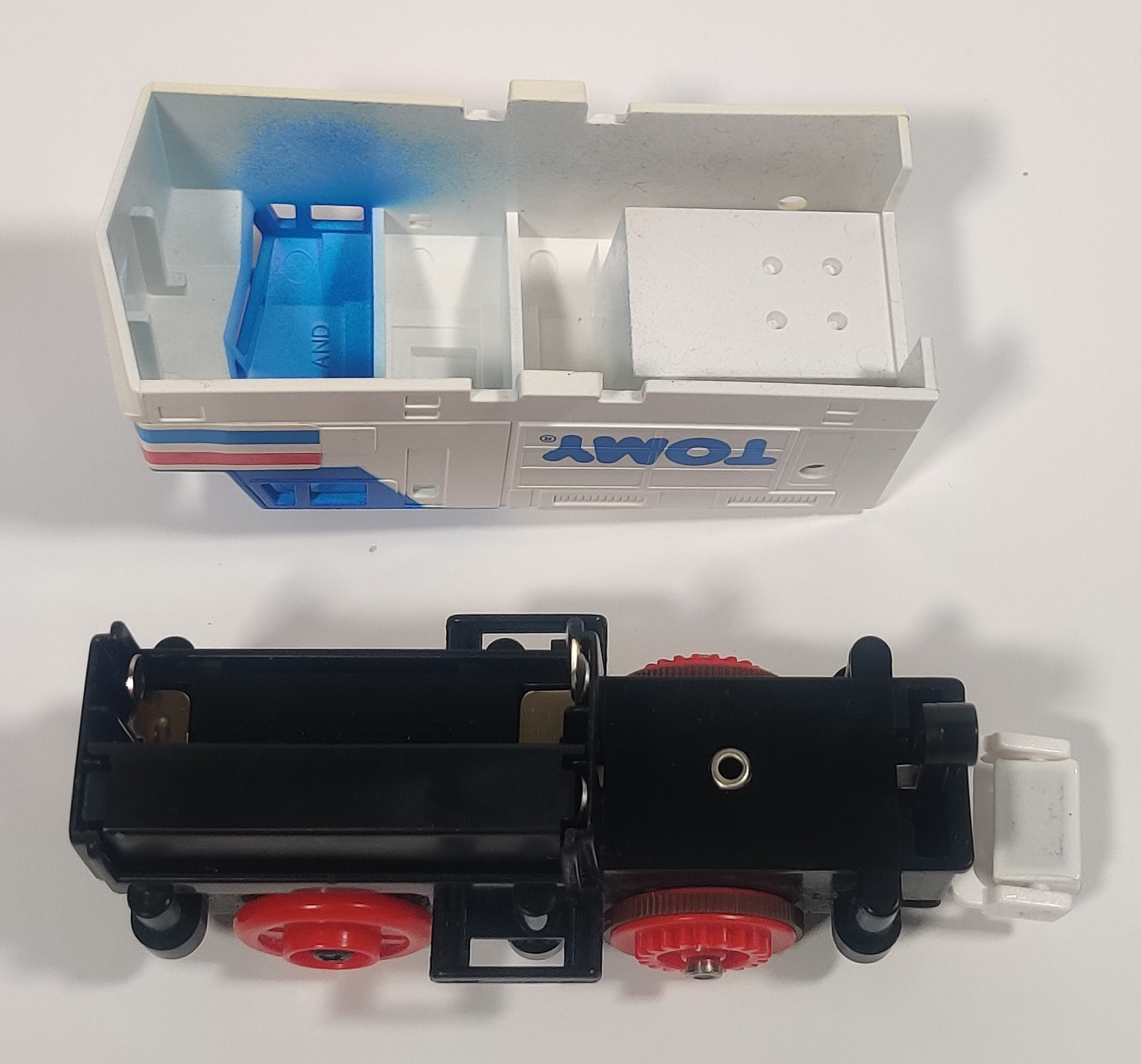
The battery compartment, contact strips, and power switch are part of the upper chassis section, with the motor's terminals forming a crush connection with the upper contact strips when the two parts are screwed together. The rotating power switch actually also nudges one of the gears over so the gearbox goes into neutral for free-wheeling - make sure the power switch is in the on position to make reassembly slightly easier. The screw pointing upwards from the underside of the top section hold a blanking cover over a second battery slot - the tooling even has the directional information molded in. It seems that like the older Big Loader chassis that the compartment was designed for two AAs in parallel but I suspect that many people would be used to installing batteries in alternating directions to make series packs and end up short circuiting both cells together in a loop. In parallel, mixed batteries would also try to balance each others charge out, which I don't believe is particularly ideal either. Either way, battery acid should be neutralized using vinegar or lemon juice and cleaned off, and the second compartment can be left open and used if the intended slot is not making good contact or if one or the other contact is broken off.
Old Tomy gears are known to split and spin on their axles with age. Replacing gears will produce better results than gluing for traditional gears which have split through the teeth - the split tooth will not mesh properly with its mating gear. If a gear like the contrate gear has split at the stem but not all the way to the ring of teeth the collar can sometimes be glued back in place successfully as the meshing face is intact.
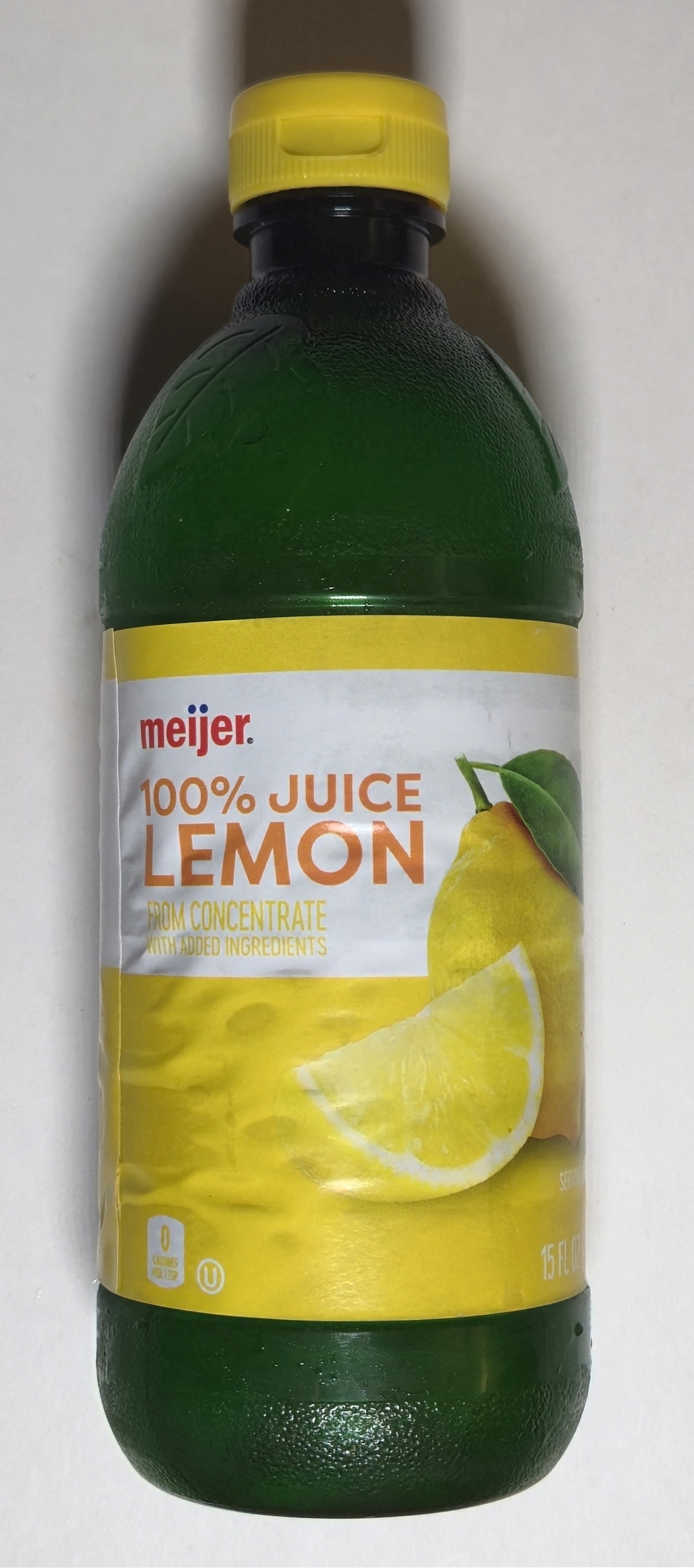
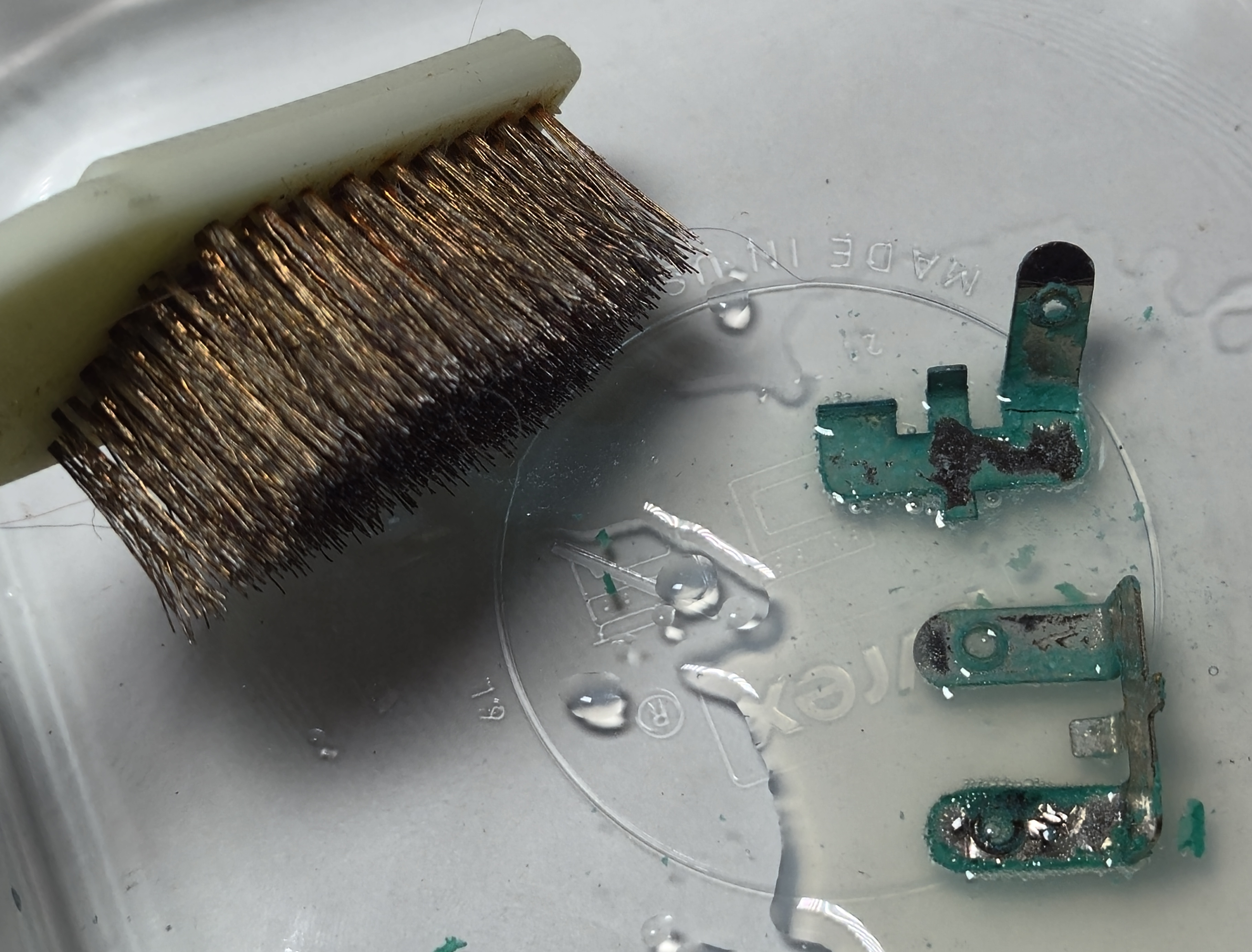
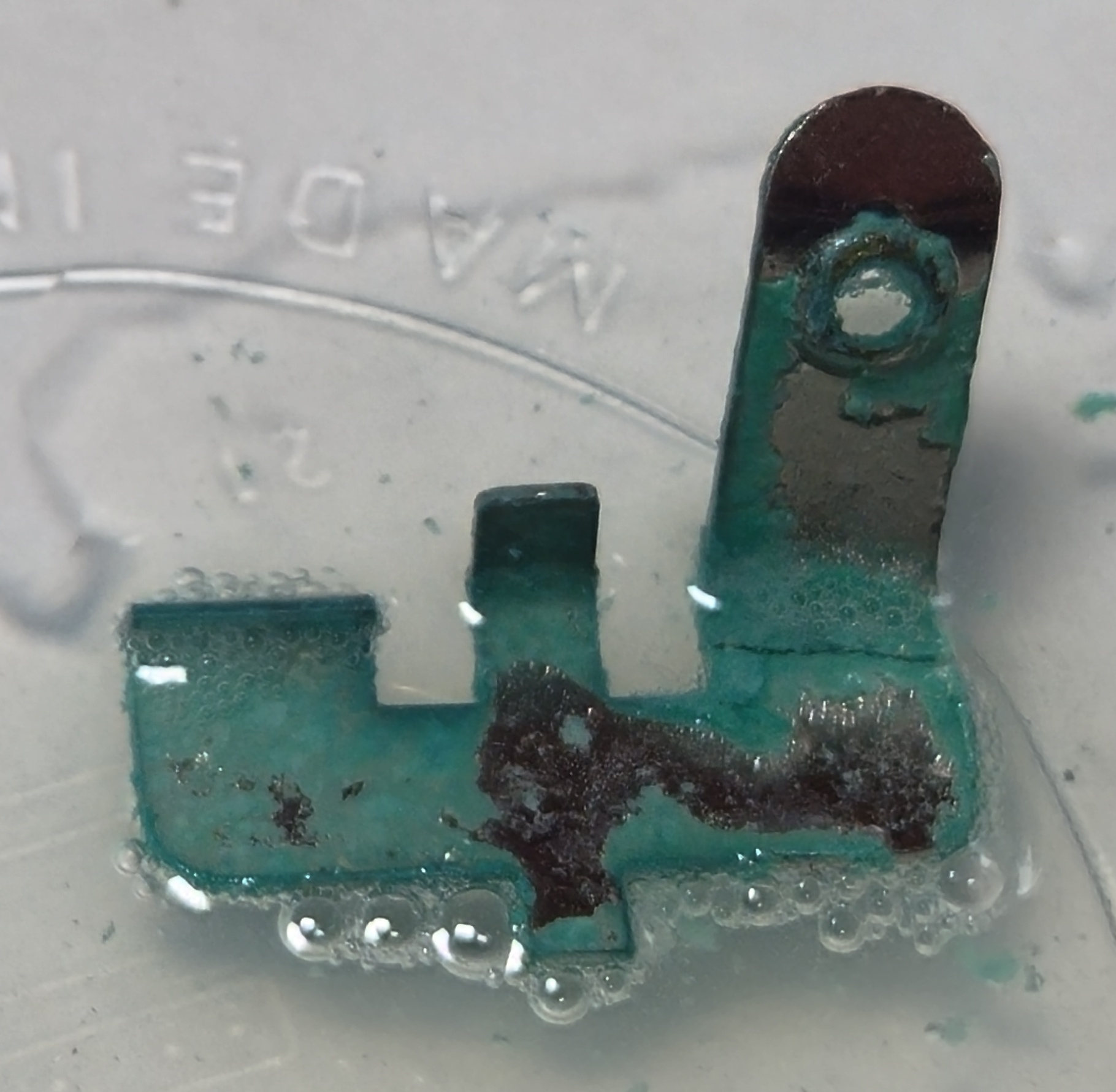
Corrosion on battery contacts can be removed with vinegar or lemon juice with some kind of abrasive brush or towel. Avoid touching the battery corrosion and wash your hands after cleaning contacts. I like using a wire file card brush and lemon juice in a container of some kind. The corrosion should bubble as it is neutralized. Sometimes, weakened contacts will still snap and another set will need to be taken from another chassis or recreated.
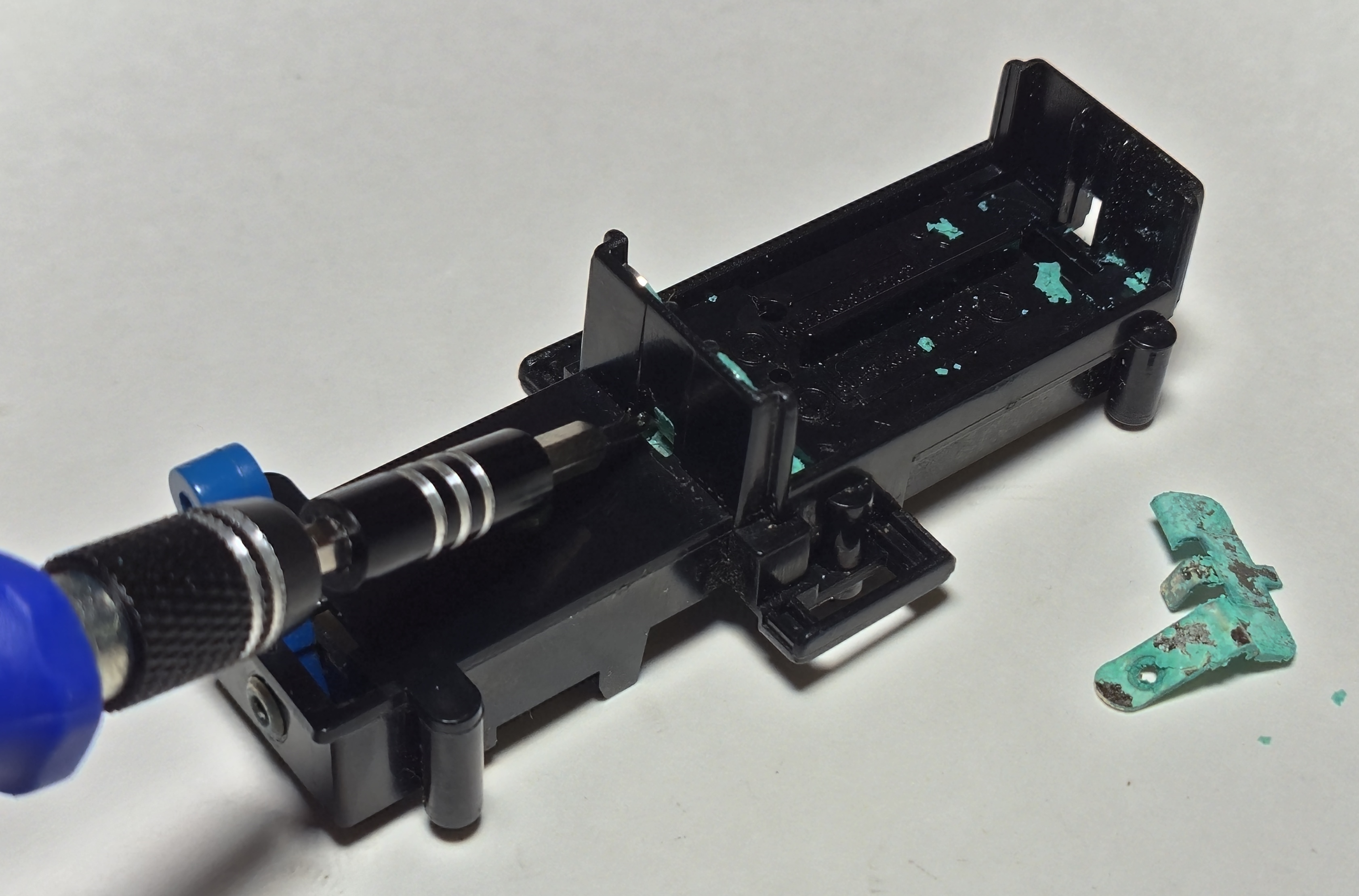
The easiest way to get good coverage is to remove and submerge the contacts that are corroded. Many toys, Tomy and otherwise, often have clip-in terminals that can be popped out of their surrounding plastic casing.
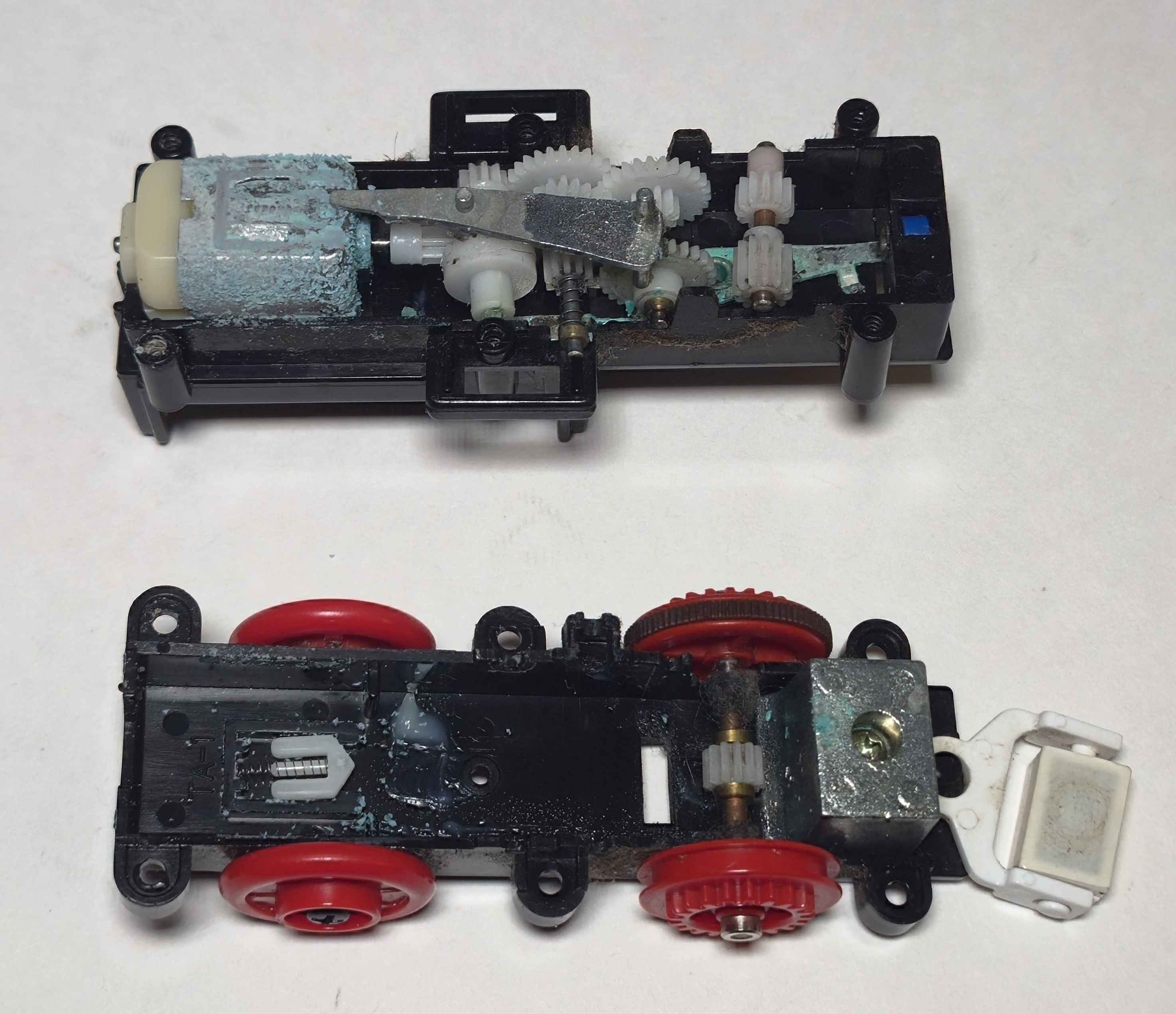
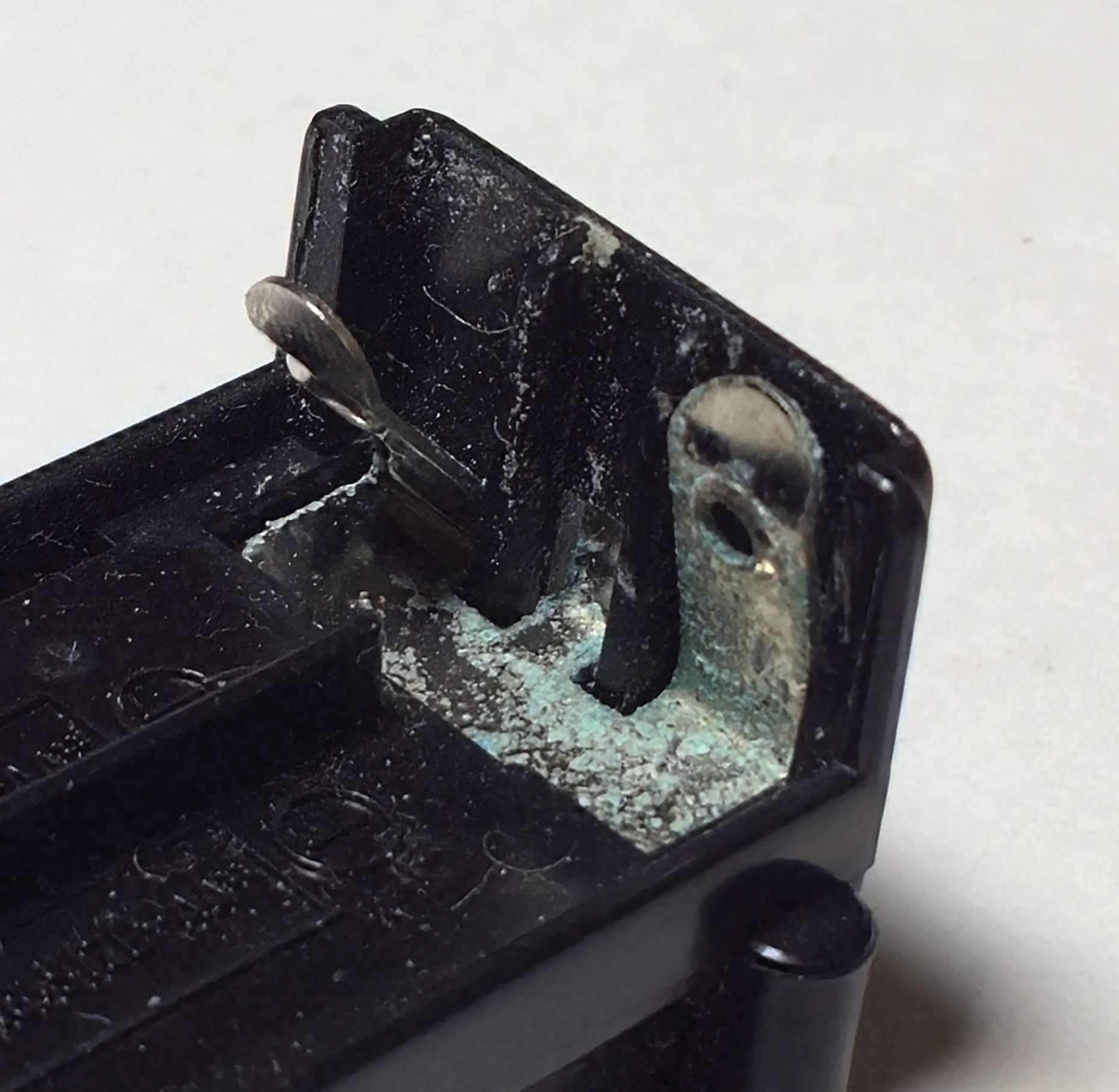
The chassis these contacts come from was extremely corroded, with the motor past the point of reasonable restoration, and some of the contacts were split and broke further during cleaning, so I ended up combining it with parts from a chassis with less corrosion.
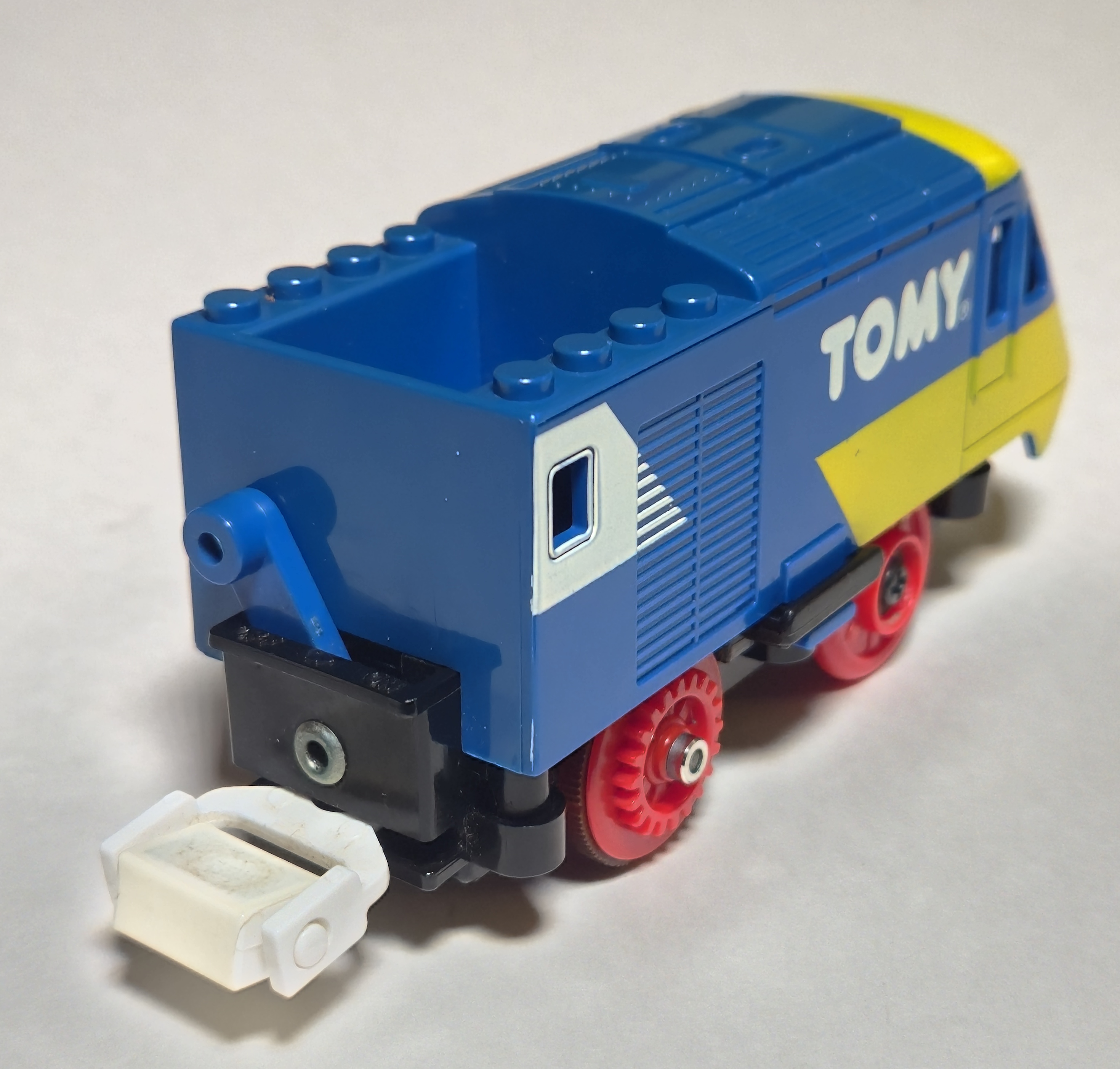
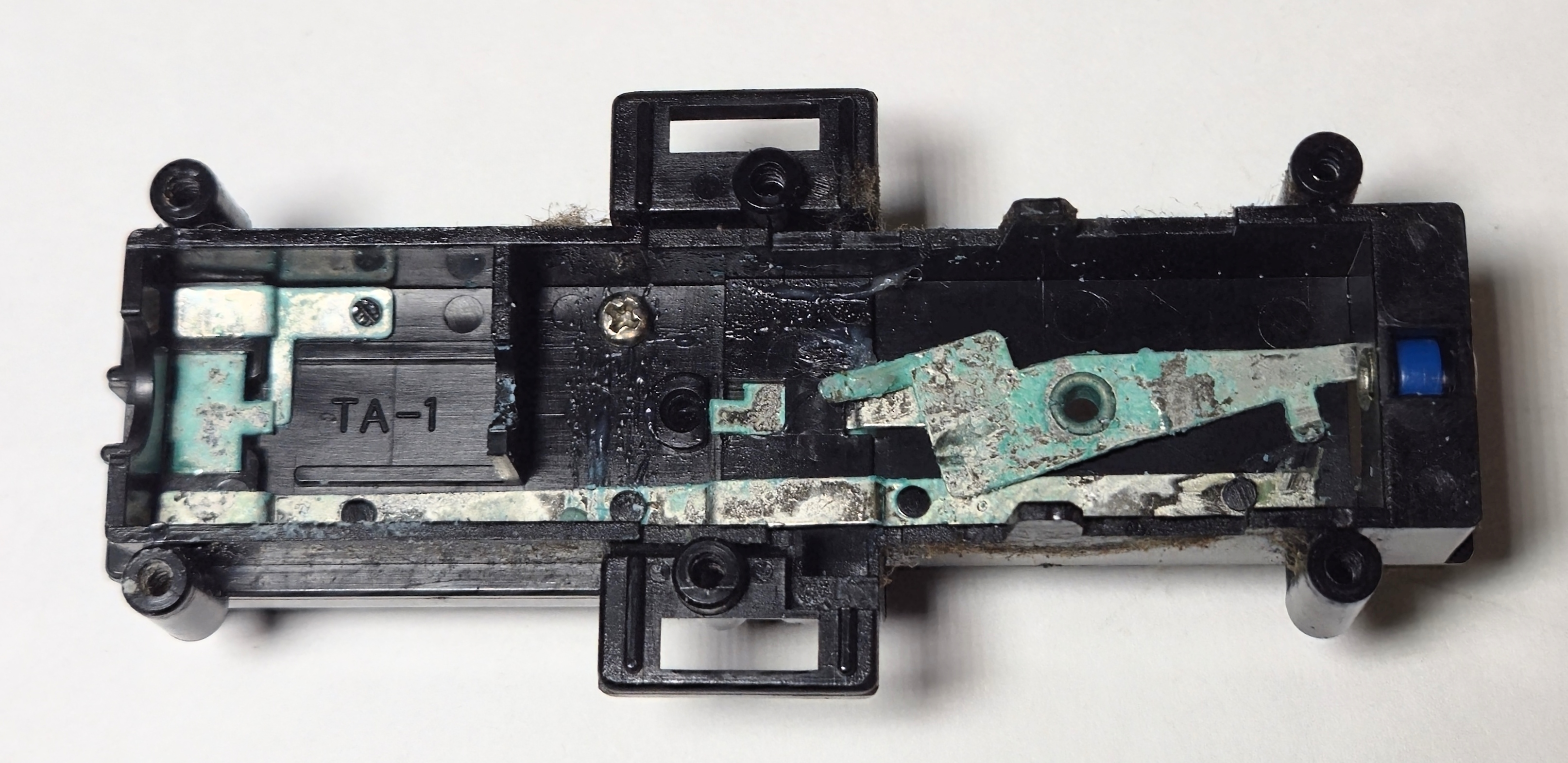
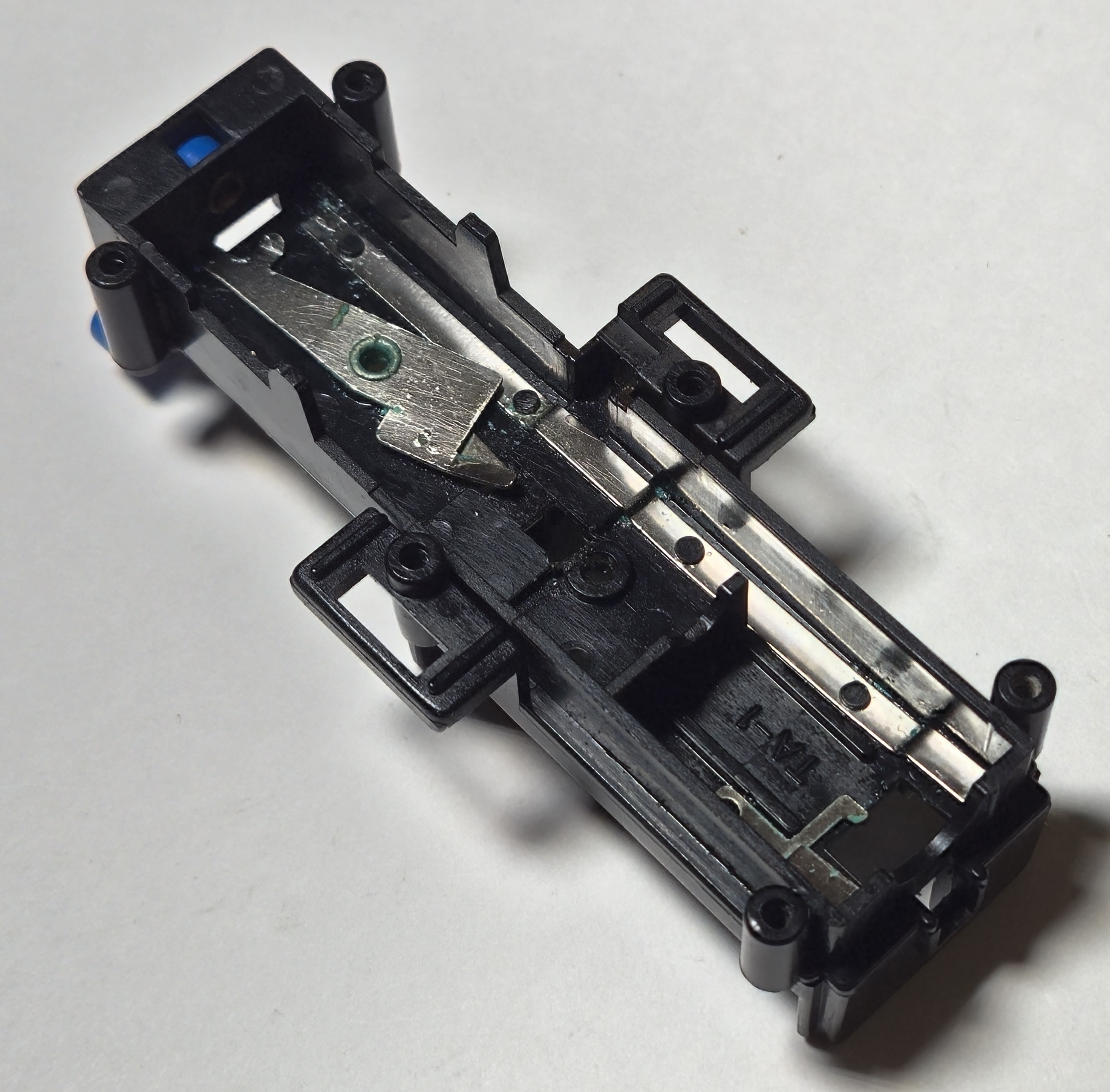
Normally, I would just swap the entire chassis out as most Tomy Train chassis are identical, but this is the particular TOMYTRAIN 4 variant of the Inter-city train chassis with the specific blue power switch which is not easily swapped out, so I had a reason to use at least the top section. The contact strips were corroded but honestly fared better than the motor, so it wasn't too hard to get the file card brush into the chassis and scrape away the corrosion.
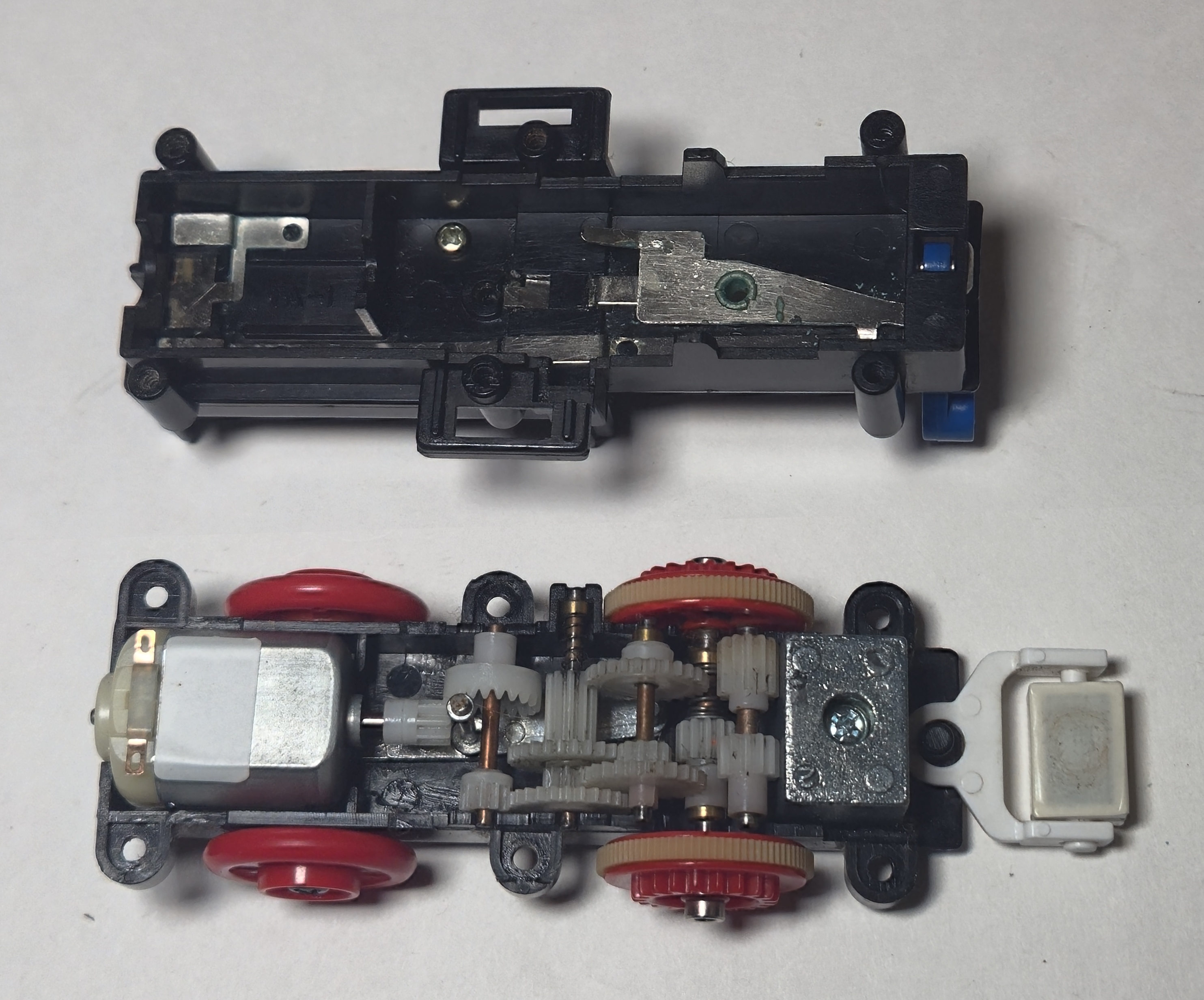
It ended up coming back together pretty nicely - the good thing about having a relatively small range of locomotives that mostly use the same chassis is that it is not hard to get sacrificial engines for replacement parts.
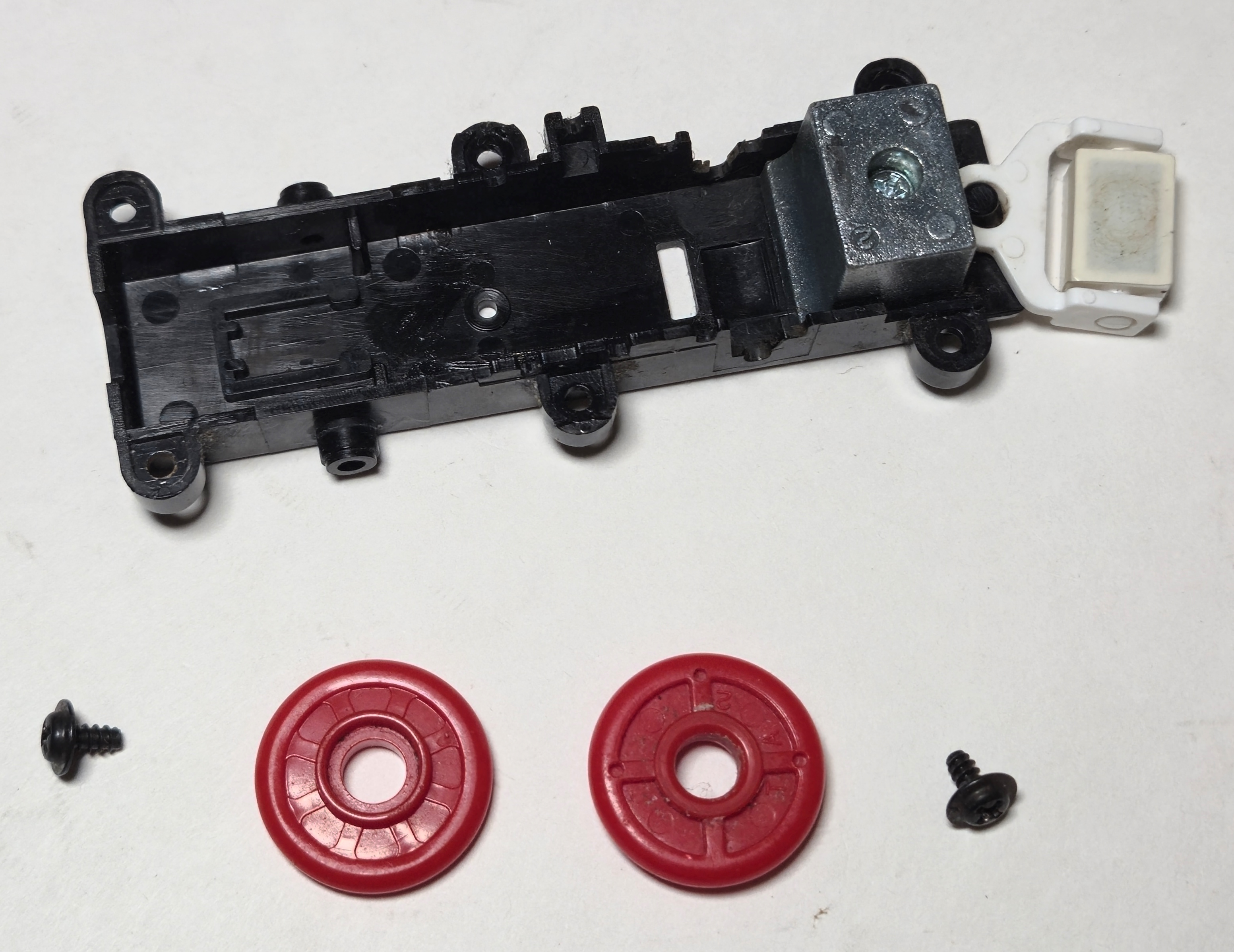
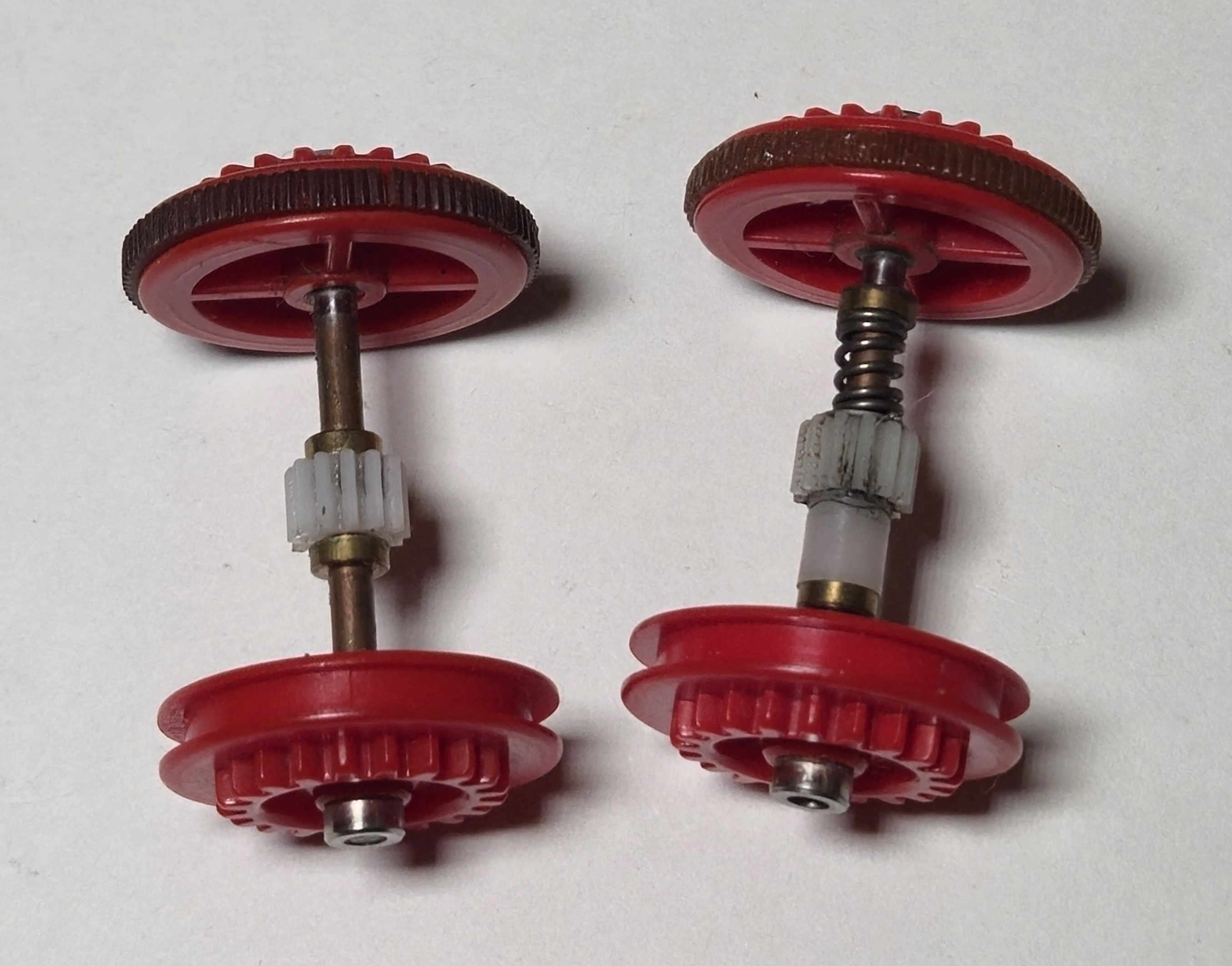
I ended up using the bottom portion and some of the gears from the donor chassis, and also swapped around the wheels because they were a slightly different shade between the two - the donor's wheels also had some plastic stress damage. The front wheels are held on with screws. The rear axles are a different design, and I like the newer spring-clutch style better. Actually, the Inter-City was produced in January 1991 and the donor chassis was from July 1991, so these changes must have occurred in early-mid 1991.
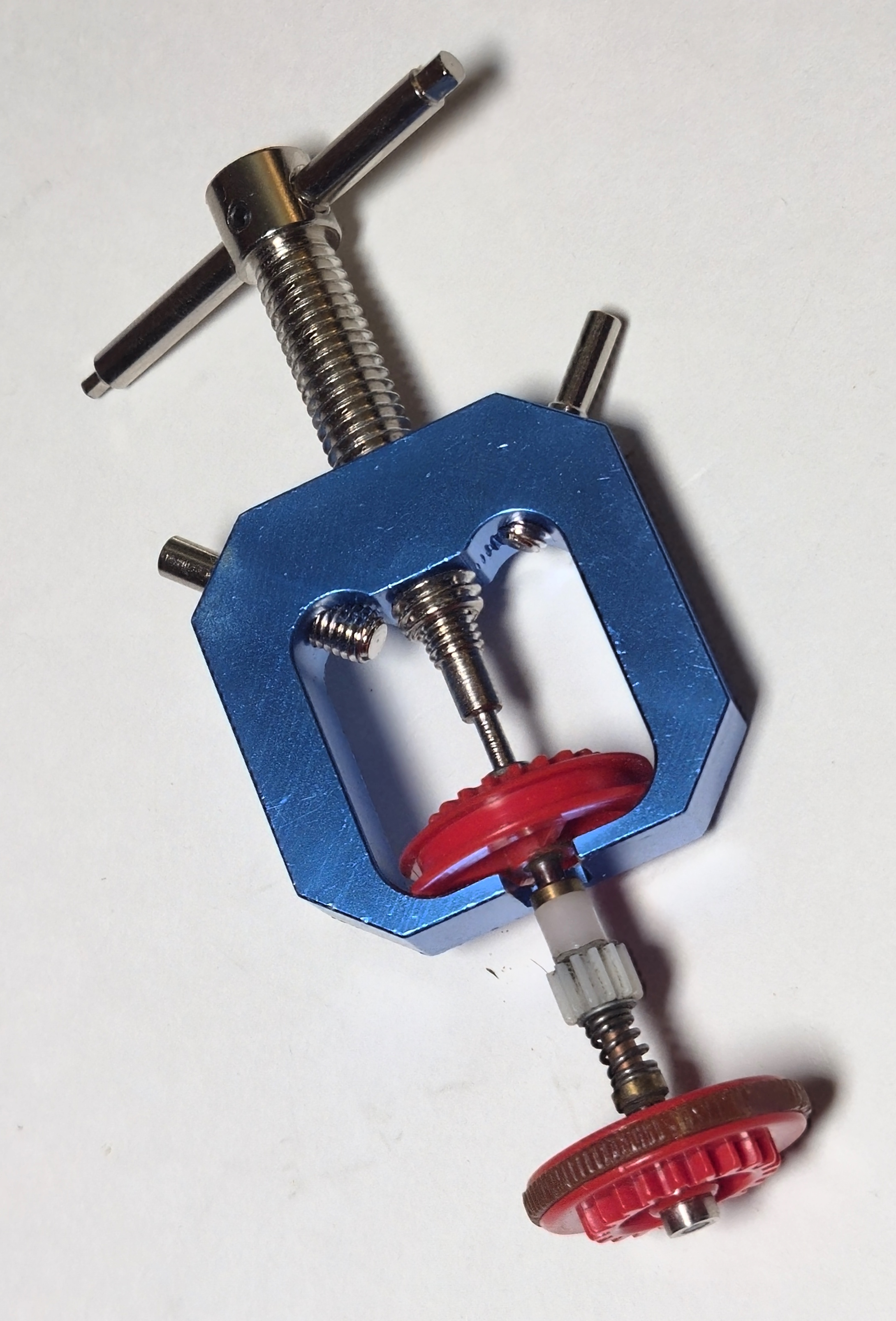
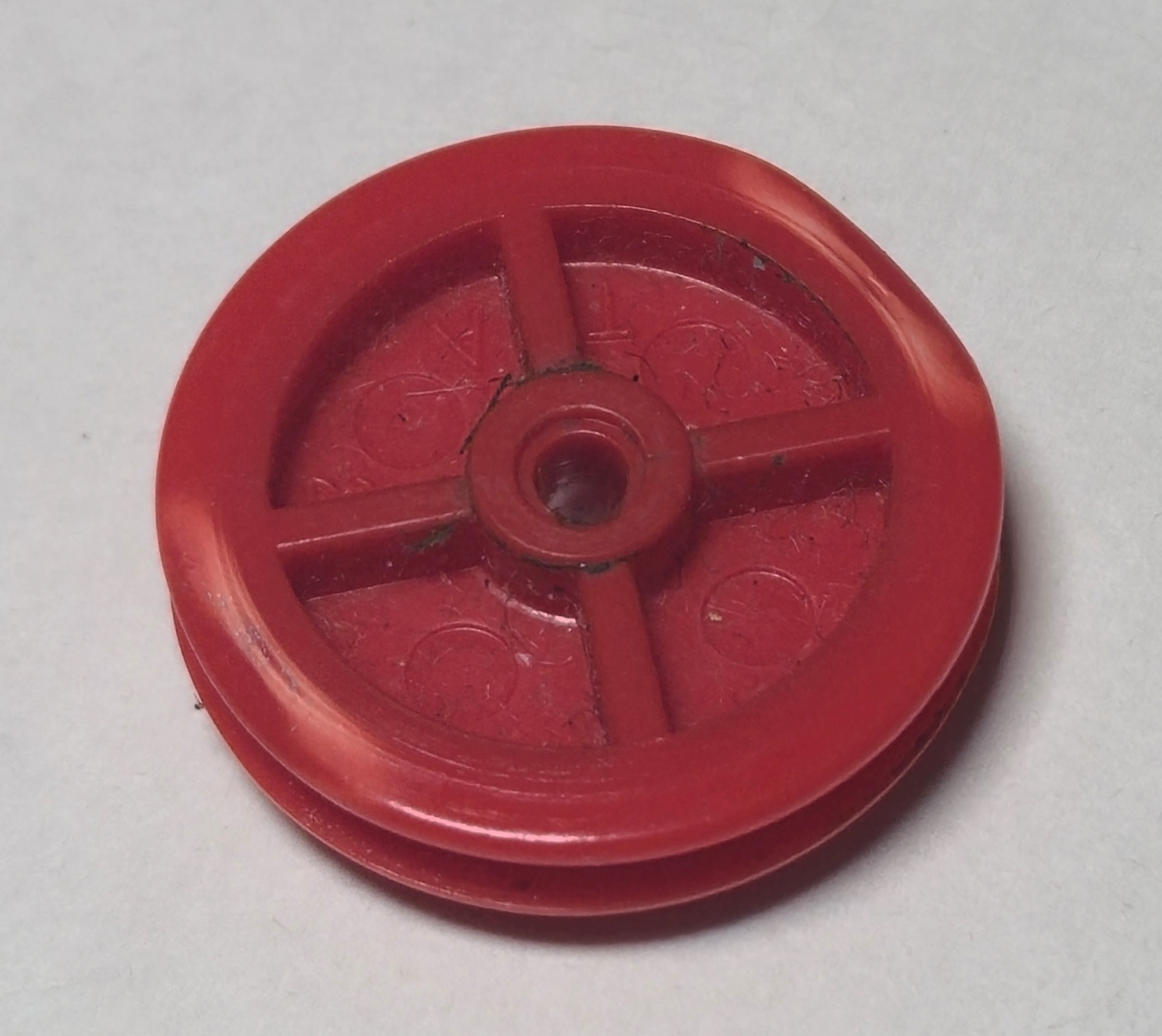
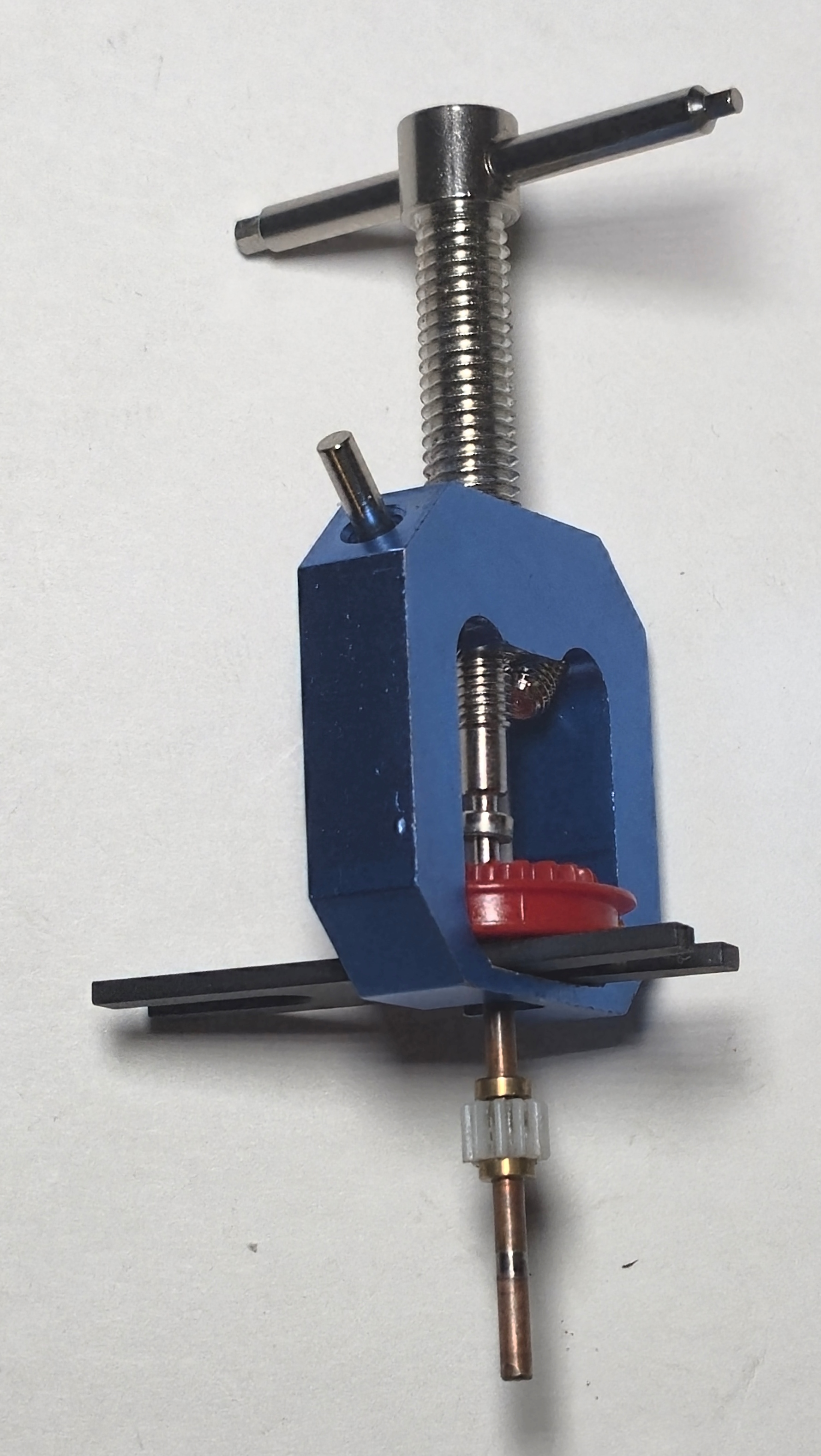
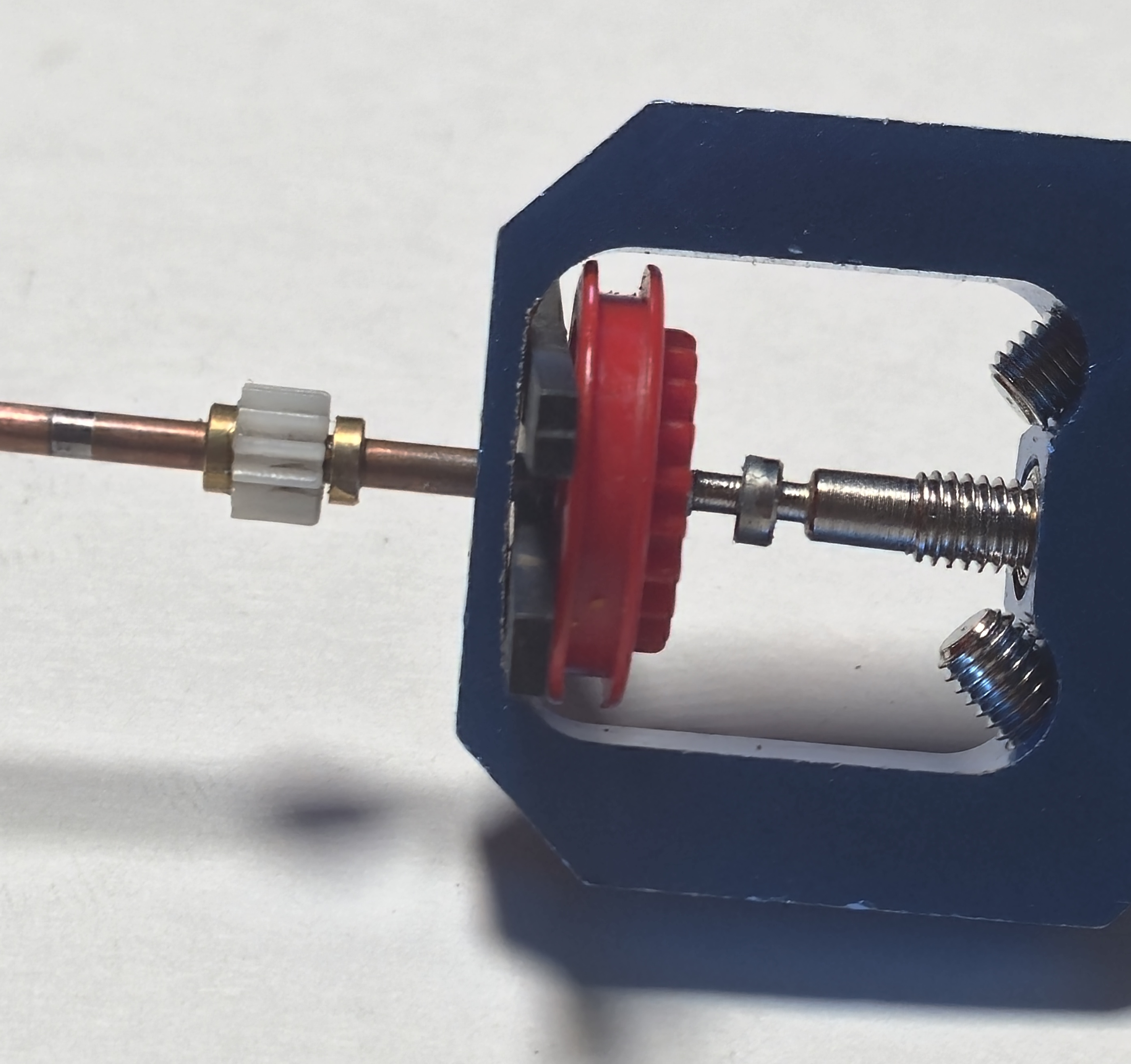
I didn't have much luck pulling just the metal cap off the end of the axle, and the larger-jawed style of the common pinion puller damaged the rear of the wheels by pushing them against the inside corners of the frame. By putting the plate from one of the smaller-jawed pinion pullers between the wheel and bottom jaw of the puller it held the wheels higher up and out of harm's way.
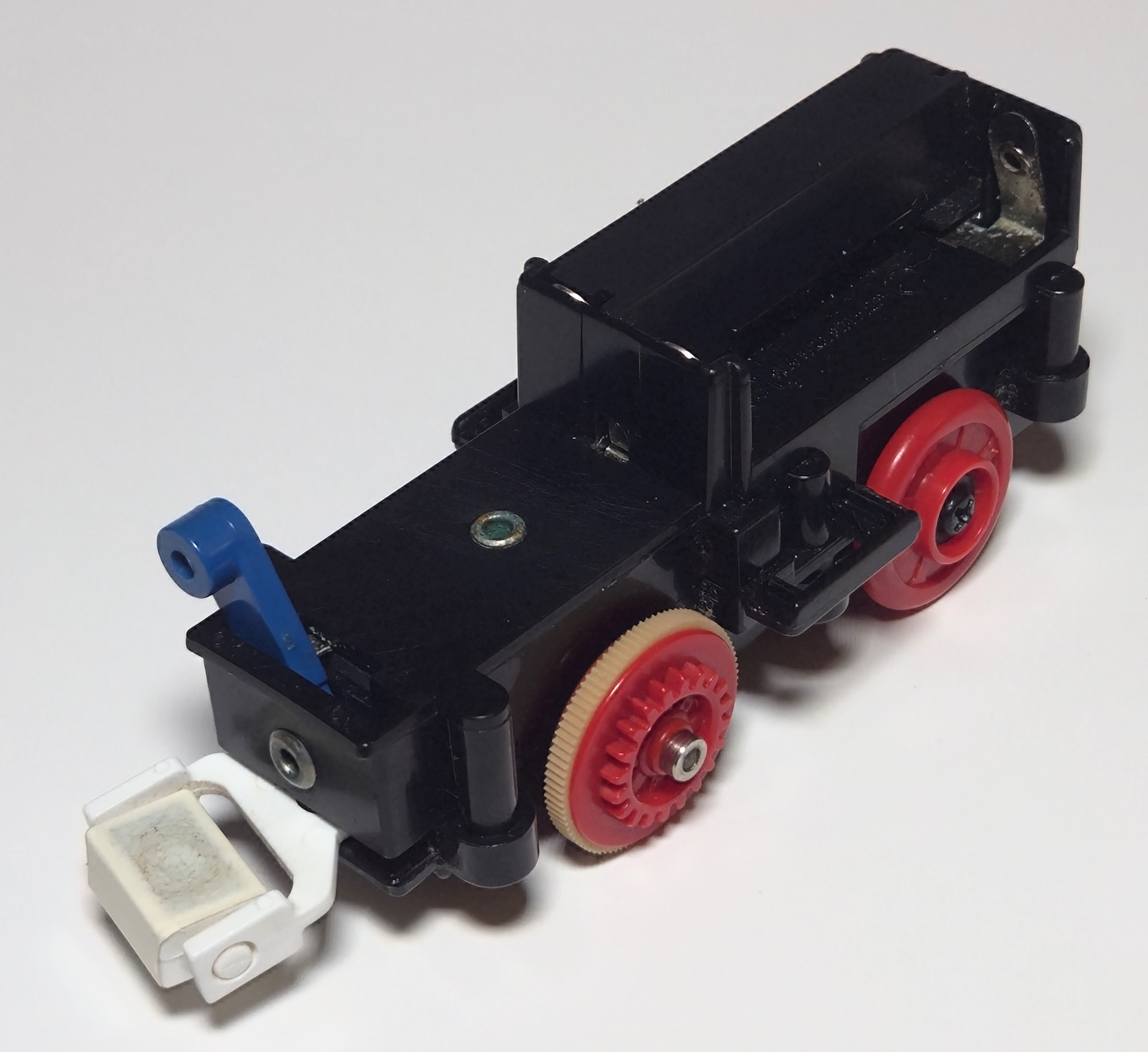
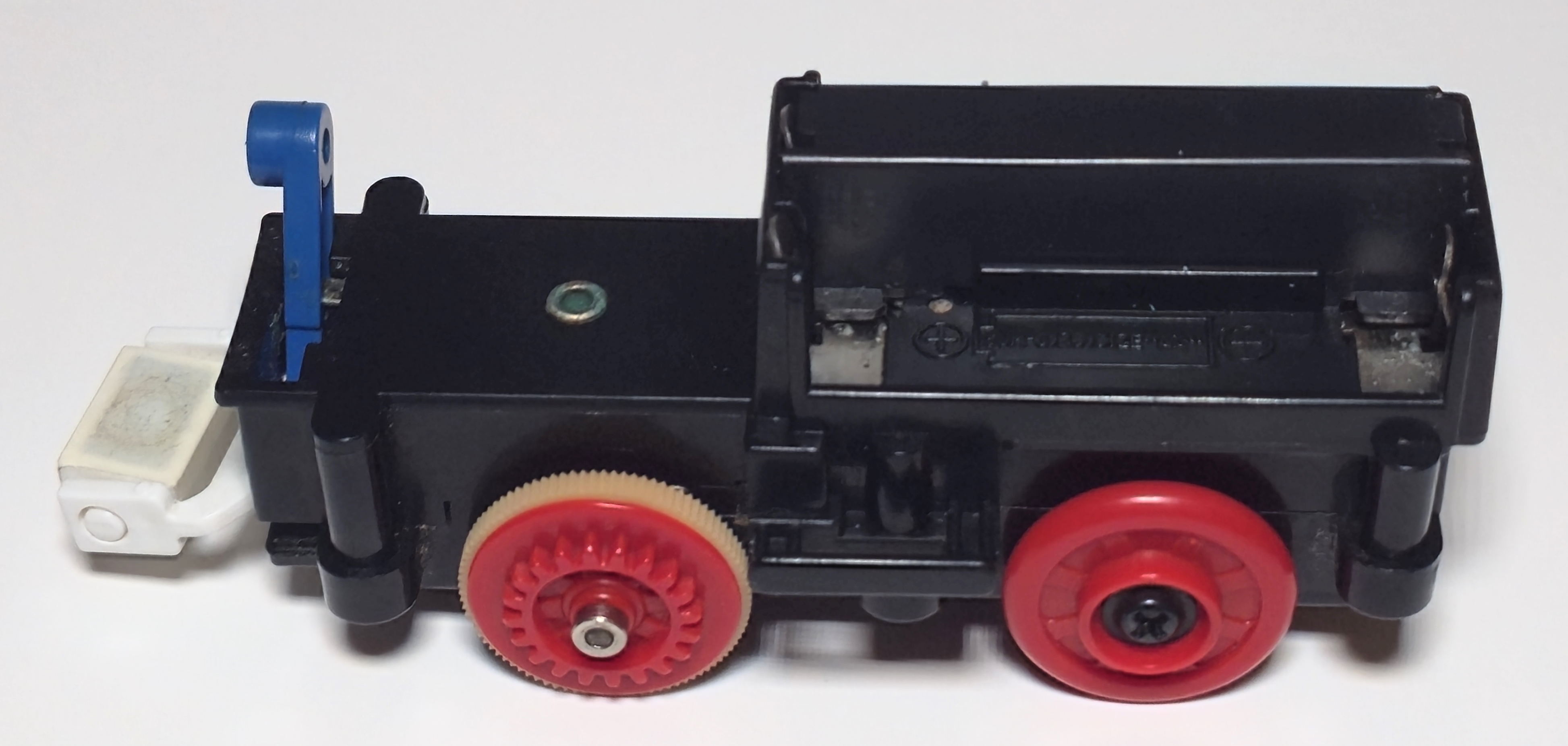
Looking much better...